

When large, reddish-brown roaches start turning up in a basement or garage, the first question is usually which bait to buy. There isn’t one product that’s best for every home. The right bait for American roaches depends on where they’re living, where they’re coming from and what else is going on in the space. This guide walks through the bait types, how to choose between them and what makes any of them work.
Why American Roaches Are a Different Problem
American cockroaches are big, up to about two inches long, reddish-brown with a pale band behind the head. Unlike German roaches, which live in kitchen cabinets and appliances, American roaches favor dark, damp spaces: basements, crawlspaces, utility rooms, floor drains and sewer lines. In the Treasure Valley’s dry climate they’re less common indoors, and when they appear they’re often tied to moisture, plumbing or a commercial building with sewer access. Our cockroach identification guide can confirm what you’re seeing.
That habitat drives the choice of bait. A product that works well in a kitchen cabinet may be the wrong form for a crawlspace or the outside of a foundation.
How Roach Bait Works
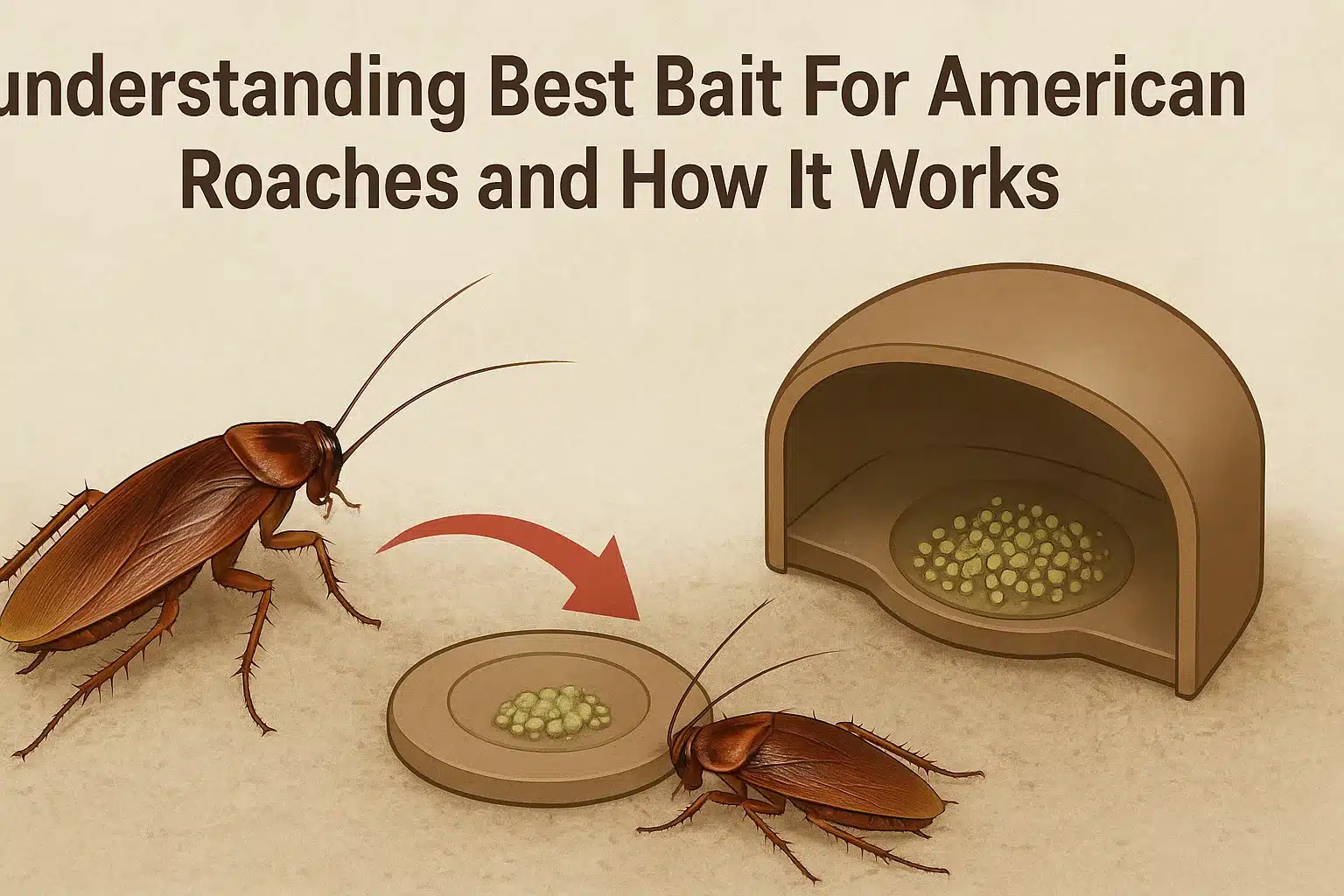
Bait pairs a food attractant with a slow-acting insecticide. Roaches feed and return to where they hide, and roaches that feed on their droppings or remains can be affected too. For a full explanation, see how American cockroach bait works.
Types of Bait for American Roaches
Gel bait
Best suited to: cracks and crevices indoors, such as gaps around pipes, along baseboards in utility rooms and near water heaters.
Gel goes in small dots right where roaches travel and rest. It’s precise, but it can dry out faster in warm, dry spots and needs checking.
Bait stations
Best suited to: basements, garages and utility areas where you want bait that’s contained and easy to check.
Stations hold bait inside a small housing and keep it fresher longer than exposed gel. Larger stations made for bigger roaches are worth looking for, since American roaches are too big for some small stations.
Granular bait
Best suited to: crawlspaces, garages and outdoor areas around the foundation, mulch beds and utility entry points.
Granules are scattered over an area, which suits the larger territories American roaches cover outside and in crawlspaces. Many granular products are labeled for outdoor use, so check where each one can go.
How to Choose
- Read the label. Make sure American cockroaches are listed, and check where the product can be used: indoors, outdoors, crawlspaces or all three. The EPA’s guide to pesticide labels explains what to look for.
- Match the form to the location. Gel for cracks, stations for contained indoor spots, granules for crawlspaces and the exterior.
- Look at where the roaches are. Sticky traps set along walls for a few nights will show where activity is concentrated. Our post on cockroach traps covers where to put them for American roaches.
- Plan to rotate. Switching between bait formulations over time helps keep roaches feeding.
Factors That Affect Results
- Moisture: damp basements, leaks and crawlspaces keep drawing roaches back.
- Competing food: garbage, pet food and organic debris make bait less appealing.
- Repellent sprays: spraying near bait can keep roaches from feeding on it.
- Entry routes: roaches coming up from drains or in from the outside will keep arriving until those routes are addressed.
- Bait condition: old, dried or dusty bait doesn’t attract roaches.
Signs of American Roach Activity
- Roaches near drains, in basements or in crawlspaces, especially at night
- Larger droppings, blunt at the ends, along walls and in corners
- Dark brown egg cases, about a third of an inch long, near food or water
- A musty odor in damp areas
After Baiting: Keeping Them Out
- Run water in rarely used drains to keep traps full, and cover floor drains.
- Fix leaks and lower humidity with a dehumidifier.
- Clear leaf litter, mulch and woodpiles away from the foundation.
- Seal gaps around pipes, vents, doors and the foundation.
- Keep garbage bins closed and away from the house.
Our roach bait guide covers placement mistakes that apply to every species.
American Roach Bait FAQs
What’s the best bait for American roaches?
The one labeled for American cockroaches in the form that fits where they are: gel for cracks, stations for contained indoor spots and granules for crawlspaces and outdoors. Placement matters as much as the product.
How long does bait take to work on American roaches?
It varies with the product and the size of the problem. Expect gradual change over weeks, and use monitoring traps to see whether numbers are dropping.
Why do I keep seeing American roaches after baiting?
Usually because they’re still getting in from a drain, sewer line, crawlspace or the outside, or because moisture keeps drawing them back.
Roach Treatment With ProGuard
Roach treatment is a separate service from our quarterly pest control plans, and it isn’t part of a standard residential pest control plan. A technician inspects to find where roaches are living and getting in, treats those areas directly and schedules follow-up visits as needed. We treat homes, apartments and commercial properties. No contracts; cancel with 30 days’ notice.
ProGuard is based in Eagle and serves Boise, Meridian, Nampa, Caldwell, Star, Middleton, Emmett and Garden City. If American roaches keep showing up, call (208) 352-2062 or contact us.