

Spiders are a normal part of outdoor life, but when they start taking over patios, doorways, eaves, and backyards, homeowners often turn to spider poison spray hoping for a quick solution. The problem? Not all sprays work the way people expect. Some products only offer short-term relief, while others can actually make spider activity worse if misused. Understanding what truly works—and what doesn’t—can save time, money, and frustration while keeping your home safer and more comfortable. As a locally owned, veteran-owned pest control company serving Eagle, Meridian, Star, Garden City, Emmett, and Boise, ProGuard Pest Control brings real-world experience from Idaho homes just like yours.
What Is Spider Poison Spray and How Does It Work?
Spider poison spray is a chemical or natural solution designed to reduce spider activity by either killing spiders on contact or creating a treated perimeter. Homeowners often search for “spider spray near me” or “best spider poison spray” when outdoor spider activity becomes noticeable around late spring through early fall. But spiders behave differently than other pests, which changes how effective sprays can be.
Why Spiders Are Harder to Kill Than Other Insects
Unlike ants, earwigs, or wasps, spiders do not groom themselves. Many pesticide residues rely on grooming for insects to ingest toxins—spiders skip this step entirely. This means most outdoor spider control requires a strategic combination of sealing entry points, targeting hiding areas, and using sprays correctly rather than relying on spray alone.
Where Spider Poisons Actually Work
- Treating known web-building areas
- Creating outdoor perimeter barriers
- Reducing insect prey around the property
- Applying treatments to cracks, gaps, and crevices where spiders shelter
Limitations of Spider Poison Sprays
Outdoor elements like sunlight, rain, sprinklers, and wind quickly degrade most chemical sprays. Even the strongest products require re-application or professional-grade solutions to remain effective for more than a few weeks.
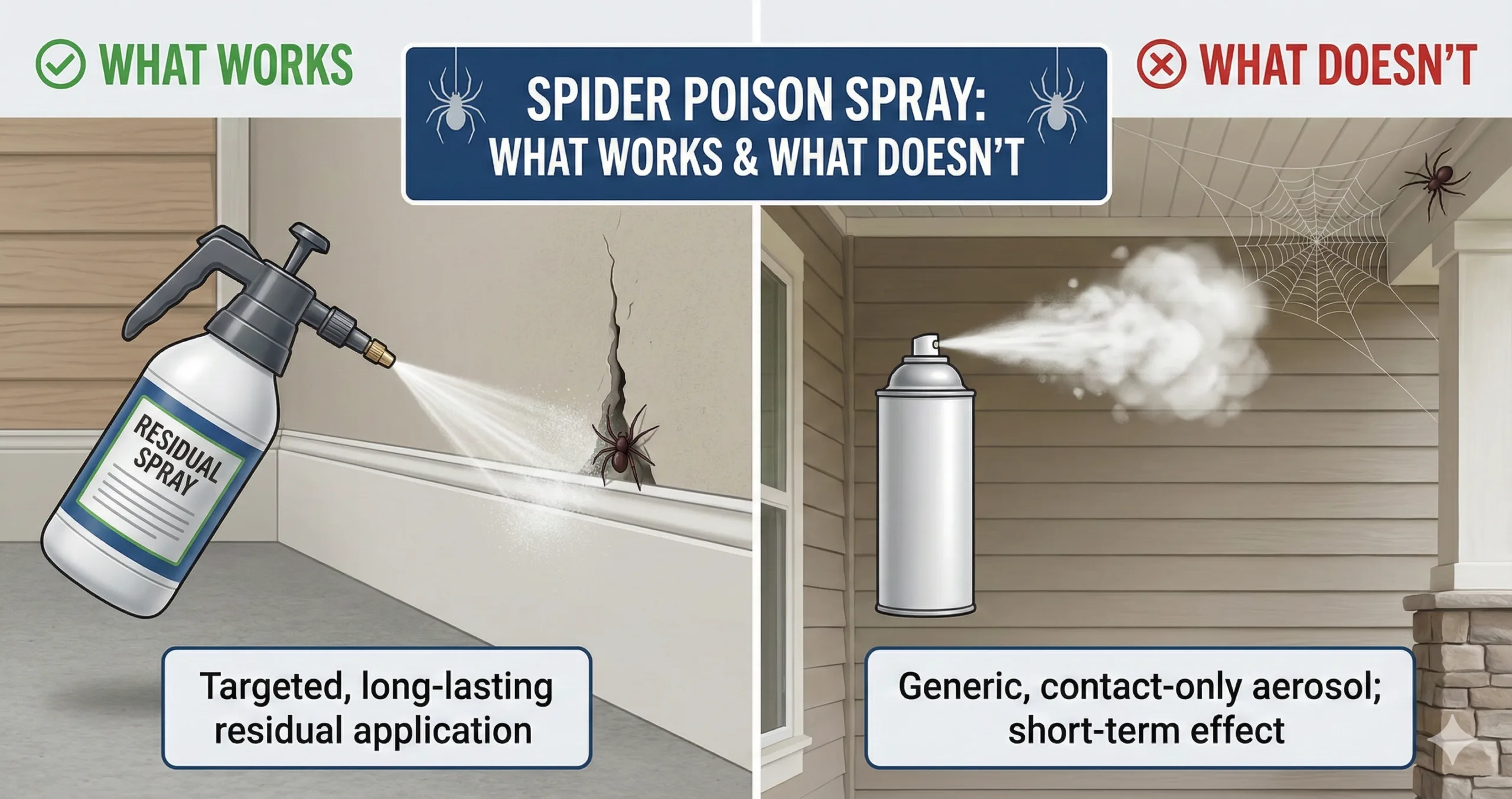
Spider Poison Spray: What Works and What Doesn’t
Not all outdoor spider control methods deliver the same level of results. Below is a breakdown of which sprays are effective and which fall short for the average homeowner.
What Actually Works for Outdoor Spider Control
1. Residual Insecticides Applied to Web Zones
Residual sprays, when applied to siding, eaves, soffits, windowsills, and door frames, help reduce spider activity around frequently used areas. These products leave behind microscopic residues that impact spiders when they walk across treated surfaces.
2. Sprays That Target Insect Prey
Spiders follow food. If your home attracts flies, mosquitoes, gnats, or ants, spiders will follow. Sprays targeting these pests indirectly reduce spider populations.
3. Crack-and-Crevice Treatments
Spiders hide in small gaps, voids, and holes. Treating these zones has far more impact than focusing on open surfaces.
4. Professional-Grade Solutions
Licensed applicators like ProGuard Pest Control use formulations not available in stores. These products last longer, perform better in outdoor weather, and are part of a broader, more effective service strategy.
What Doesn’t Work Well Against Spiders
1. Foggers and “Bombs”
Foggers are ineffective outdoors and don’t penetrate spider hiding spots. Spiders simply avoid open areas until the fog dissipates.
2. Essential Oils Used Alone
Certain oils may temporarily repel spiders, but they do not resolve infestations and wash off quickly outdoors.
3. General Bug Sprays Not Designed for Spiders
Many general insect sprays contain active ingredients spiders rarely come into contact with. These formulas are not designed for spider physiology and produce poor results.
4. Over-the-Counter “Natural” Sprays
Most natural sprays lack residual power. Once the product dries, its effectiveness drops significantly.
How to Use Spider Poison Spray Properly for Maximum Results
Applying spider spray isn’t as simple as covering visible webs. Effective outdoor spider control requires proper technique, timing, and coverage.
Step-by-Step Application Strategy
1. Remove Webs Before Spraying
Spiders rebuild webs frequently, sometimes within hours. Removing webs before applying spider poison spray ensures the treatment reaches the surfaces spiders walk on.
2. Treat High-Traffic Spider Zones
- Eaves and overhangs
- Garage doors and frames
- Patio furniture
- Deck railings
- Basement windows
- Exterior light fixtures
3. Spray Prey-Attracting Joints and Entry Points
Concentrate on insect hotspots like porch lights, garbage areas, and wooded fence lines—places where spiders hunt.
4. Apply Before Insect Season Peaks
Early spring and late summer are optimal times to treat your property, ensuring coverage during high spider activity.
5. Maintain Regular Outdoor Treatments
Most sprays need reapplication every 60–90 days unless a professional service provides long-lasting formulas.
Outdoor Spider Control Beyond Poison Sprays
Spider poison spray alone is rarely a complete solution. Effective outdoor spider control combines chemical and non-chemical strategies to reduce populations long-term.
Reduce the Insects That Spiders Feed On
Eliminating spider prey is one of the most powerful ways to reduce spider populations. Spiders go where the food is.
- Use yellow light bulbs that attract fewer insects.
- Reduce standing water and moisture around the property.
- Keep landscaping trimmed and away from siding.
- Seal gaps around windows and doors to reduce insect intrusion.
Keep Web-Building Sites Clean
Routine sweeping of corners, rafters, and eaves discourages spiders from returning to build new webs.
Control Environmental Factors
Heavy foliage, outdoor clutter, and moisture around foundations create ideal spider shelters. Improving airflow and sunlight exposure in these areas helps naturally limit spider activity.
Use Professional Inspections for High-Risk Properties
Spider issues often spike in homes near water, heavy vegetation, outdoor lighting, or woodpiles. ProGuard Pest Control specializes in identifying these high-risk conditions and designing targeted treatment plans.
Why Professional Outdoor Spider Control Outperforms DIY Sprays
DIY sprays often disappoint because homeowners can’t access the same tools, products, or knowledge that licensed professionals use. Professional outdoor spider control from ProGuard Pest Control gives homeowners better, longer-lasting results.
Advantages of Professional Spider Control
- Stronger, longer-lasting products approved for licensed use
- Precision application techniques for hard-to-reach spider zones
- Comprehensive coverage around siding, eaves, and entry points
- Customized solutions based on property layout and pest activity
- Focus on safety for families, children, and pets
- No-contract services with a 100% satisfaction guarantee
ProGuard Pest Control: Local Experts Who Know Idaho Spiders
From wolf spiders to cellar spiders to common house spiders, Idaho properties attract a wide range of species year-round. ProGuard Pest Control’s technicians understand local spider habits and the unique outdoor environments of Eagle, Star, Garden City, Meridian, Emmett, and Boise. Our targeted approach ensures fast relief and long-term protection.
When to Call a Professional for Outdoor Spider Control
Not all spider problems require professional intervention, but certain situations do. If your home experiences any of the following, a professional visit is recommended:
- Recurring webs appearing immediately after removal
- Large populations around doors, decks, or play areas
- Spiders inside the home despite DIY treatments
- High insect activity drawing spiders closer
- Presence of venomous spiders such as black widows
ProGuard Pest Control can provide fast, effective solutions tailored to your property.
Conclusion: Get the Best Outdoor Spider Control With ProGuard Pest Control
Spider poison spray can help manage outdoor spider activity—but only when used correctly and paired with a comprehensive approach. For Idaho homeowners looking for reliable, long-lasting results, professional outdoor spider control is the most effective method. ProGuard Pest Control is locally owned, veteran-owned, family- and pet-safe, and backed by a 100% satisfaction guarantee. If you want a spider-free home without the hassle, our team is ready to help.
Schedule your outdoor spider control service today and enjoy a cleaner, safer, and more comfortable home.
Explore our full pest control services
Frequently Asked Questions
Does spider poison spray work on all spider species?
Some species respond better to residual sprays than others. Web-building spiders are easier to treat than fast-moving hunting spiders.
Is outdoor spider control safe for pets and children?
Professional treatments from ProGuard Pest Control are family- and pet-safe when applied correctly.
How long does spider spray last outside?
Most DIY sprays last 2–6 weeks, depending on weather. Professional formulations last significantly longer.
What attracts spiders to my home?
Outdoor lighting, abundant insects, moisture, and clutter around the foundation can attract spiders.
Can I prevent spiders permanently?
Spiders cannot be eliminated permanently, but consistent treatments and smart prevention greatly reduce activity long-term.
{ “@context”: “https://schema.org”, “@type”: “FAQPage”, “mainEntity”: [ { “@type”: “Question”, “name”: “Does spider poison spray work on all spider species?”, “acceptedAnswer”: { “@type”: “Answer”, “text”: “Some species respond better to residual sprays than others. Web-building spiders are easier to treat than fast-moving hunting spiders.” } }, { “@type”: “Question”, “name”: “Is outdoor spider control safe for pets and children?”, “acceptedAnswer”: { “@type”: “Answer”, “text”: “Professional treatments from ProGuard Pest Control are family- and pet-safe when applied correctly.” } }, { “@type”: “Question”, “name”: “How long does spider spray last outside?”, “acceptedAnswer”: { “@type”: “Answer”, “text”: “Most DIY sprays last 2–6 weeks depending on weather, while professional formulations last significantly longer.” } }, { “@type”: “Question”, “name”: “What attracts spiders to my home?”, “acceptedAnswer”: { “@type”: “Answer”, “text”: “Outdoor lighting, abundant insects, moisture, and clutter around the foundation can attract spiders.” } }, { “@type”: “Question”, “name”: “Can I prevent spiders permanently?”, “acceptedAnswer”: { “@type”: “Answer”, “text”: “Spiders cannot be eliminated permanently, but consistent treatments and smart prevention greatly reduce activity long-term.” } } ] } { “@context”: “https://schema.org”, “@type”: “Article”, “headline”: “Spider Poison Spray: What Works and What Doesn’t”, “description”: “Learn what spider poison sprays actually work, which ones don’t, and how to get effective outdoor spider control for your property in Idaho.”, “mainEntityOfPage”: { “@type”: “WebPage”, “@id”: “https://proguardpest.com/spider-poison-spray-what-works-and-what-doesnt/” }, “image”: “https://proguardpest.com/wp-content/uploads/2025/07/logo_200x200.png”, “author”: { “@type”: “Organization”, “name”: “ProGuard Pest Control”, “url”: “https://proguardpest.com” }, “publisher”: { “@type”: “Organization”, “name”: “ProGuard Pest Control”, “logo”: { “@type”: “ImageObject”, “url”: “https://proguardpest.com/wp-content/uploads/2019/10/proguard-logo_182x34_dark.png” } }, “datePublished”: “2025-12-09T09:00:00-06:00”, “dateModified”: “2025-12-09T09:00:00-06:00” }