

Discovering signs of mice inside your home can be unsettling. Scratching sounds in the walls, tiny droppings, or chewed food packages often signal that unwanted guests have moved in. When these pests find warmth, shelter, and food, they settle quickly—unless you take swift, strategic action. This complete homeowner’s guide walks you through getting rid of mice in your home, preventing future infestations, and knowing when to call trusted professionals like ProGuard Pest Control, a locally owned and operated, veteran-owned company serving Eagle, Meridian, Star, Garden City, Emmett, and Boise.
Understanding Why Mice Invade Homes
Before exploring mouse control solutions, it helps to understand what attracts mice to your home. These pests are survivors—resourceful, adaptable, and always searching for dependable shelter. Identifying the reasons they entered makes long-term prevention far more effective.
Common Reasons Mice Enter Homes
- Warmth during cooler months – Homes offer insulation and nesting areas that outdoor environments can’t match.
- Readily available food – Crumbs, unsealed food, or pet bowls can become easy targets.
- Accessible entry points – Mice only need a hole the size of a dime to squeeze through.
- Cluttered storage areas – Basements, garages, and attics provide safe hiding places.
Signs of Mice That Homeowners Should Never Ignore
- Small, rod-shaped droppings around kitchen cabinets or pantries
- Scratching or scurrying sounds behind walls or ceilings
- Gnaw marks on furniture, food packaging, or baseboards
- Shredded materials like paper, cardboard, insulation, or fabric
- A sour, musky smell often associated with mouse nests or urine
Once you spot even one of these indicators, it’s time to take immediate steps toward getting rid of mice before the infestation grows.
Getting Rid of Mice in Home: What Actually Works
Effective mouse control involves a combination of eliminating active pests, removing attractants, sealing entry points, and creating long-term barriers. Below are proven strategies homeowners can use to address active infestations safely and effectively.
1. Inspecting Your Home to Identify Problem Areas
Start with a thorough inspection of your home—both inside and outside. Mice tend to frequent secluded, warm, and dark areas. Pay close attention to:
- Pantries and kitchen cabinets
- Behind appliances (especially stoves and refrigerators)
- Attics and crawl spaces
- Basements, garages, and sheds
- Utility access points around plumbing and electrical wiring
2. Using Traps to Control Active Mice
Trapping remains one of the most effective methods for controlling mice inside your home. Options include:
Snap Traps
These classic traps are highly effective when placed correctly. Always position them along walls where mice tend to run.
Live Catch Traps
These humane traps allow you to capture and release mice. They are a good option for families preferring non-lethal control.
Multi-Catch Traps
Ideal for garages or storage spaces with high rodent activity.
Peanut butter, seeds, chocolate, and nuts often make effective bait choices.
3. Removing Food Sources and Improving Sanitation
Even the best trapping strategy fails if food remains accessible. Good sanitation practices disrupt food availability and make your home less appealing.
- Store pantry items in airtight containers
- Clean crumbs and spills immediately
- Seal pet food bags and avoid leaving bowls out overnight
- Take out kitchen trash daily
- Keep garage cans tightly lidded
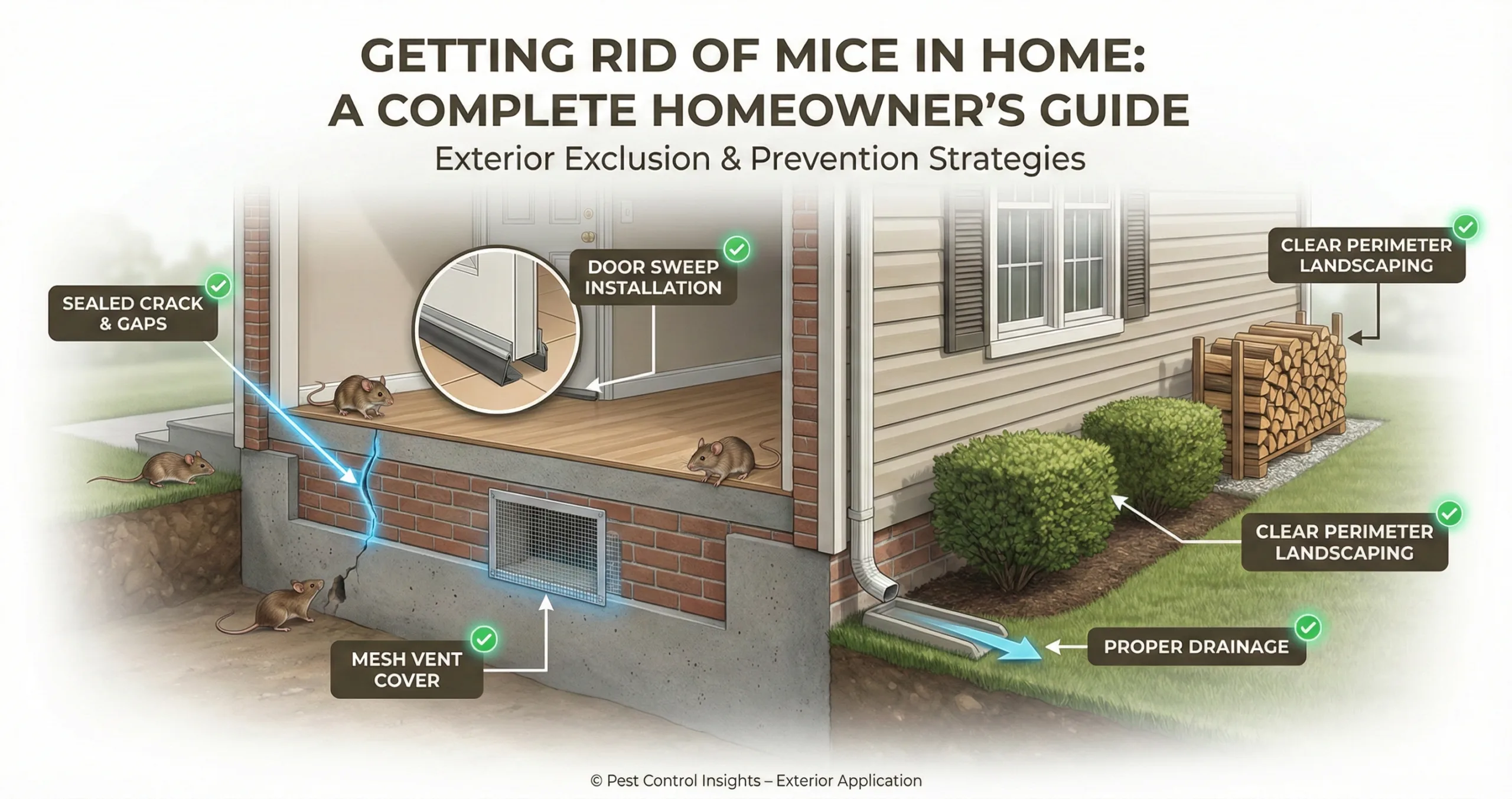
4. Sealing Entry Points Throughout Your Home
Mice can squeeze through impossibly small gaps. Sealing their entry points is one of the most effective long-term solutions. Look for gaps around:
- Foundation cracks
- Basement windows or vents
- Doors with worn weather stripping
- Utility line openings
- Gaps under siding or roofing edges
Use rodent-resistant materials such as steel wool, copper mesh, hardware cloth, or heavy-duty caulking for sealing.
5. Reducing Clutter and Removing Nesting Materials
Mice rely on soft nesting material and hidden shelter areas. Reducing clutter denies them these resources.
- Declutter basements, attics, and closets
- Store items in plastic bins with tight lids
- Keep wood piles away from the foundation
6. When Natural Methods Help—and When They Don’t
Some homeowners explore natural remedies such as peppermint oil or ultrasonic devices. While these may help reduce activity temporarily, they rarely address the root cause of an infestation. They should be considered supplemental—not a replacement for proven strategies.
Professional Mice Control Service: When Homeowners Need Extra Help
Although DIY mouse control can reduce minor infestations, mice reproduce quickly, hide in inaccessible spaces, and learn to avoid traps. In many cases, calling a trusted mouse control professional is the safest, most efficient solution.
Why Homeowners Choose Professional Mice Control Services
- Accurate identification – Experts determine the severity and source of the infestation.
- Advanced treatment strategies – Professionals use tools and methods not available over-the-counter.
- Safer solutions – Protect pets, children, and vulnerable household members.
- Long-term prevention – Professionals address structural vulnerabilities and offer ongoing protection.
ProGuard Pest Control: Trusted Local Experts
Homeowners across Eagle, Meridian, Boise, and surrounding areas rely on ProGuard Pest Control for safe, effective, and thorough mouse control. As a locally owned, veteran-owned company, ProGuard offers:
- No contracts required
- 100% satisfaction guarantee
- Family and pet-safe treatments
- Experienced technicians who understand Idaho homes and climate
Whether you’re dealing with persistent rodent activity or want to ensure your home remains protected year-round, professional support delivers peace of mind and long-term results.
Preventing Mice From Returning After Removal
Eliminating an infestation is only the first step. Preventing future activity requires consistent upkeep and simple changes to your home environment.
Essential Prevention Strategies
- Seal all cracks and crevices with rodent-safe materials
- Repair damaged screens on vents, windows, and doors
- Reduce moisture issues by fixing leaks and improving ventilation
- Maintain yard clean-up including trimming vegetation near the home
- Store firewood away from exterior walls
- Schedule routine inspections with a trusted pest professional
How Idaho’s Climate Influences Rodent Behavior
Seasonal shifts in Idaho—from warm summers to cold winters—drive mice indoors seeking warmth and shelter. This makes fall and winter prime seasons for infestations.
ProGuard Pest Control understands these seasonal patterns well, offering tailored preventative services that help protect homes year-round.
Health Risks and Property Damage Caused by Mice
Besides being a nuisance, mice pose legitimate risks to your home and health. Understanding these dangers underscores the importance of prompt and effective control.
Health Concerns
- Mice can spread bacteria through droppings and urine
- They can contaminate food in pantries and cabinets
- Certain rodent-borne diseases may pose risk when droppings become airborne
Structural and Property Damage
- Chewed electrical wiring can create fire hazards
- Damaged insulation reduces energy efficiency
- Boxes, fabrics, and stored items often become nesting material
These risks further highlight why getting rid of mice in your home quickly—and safely—is so important.
Cost of Mouse Control: What Homeowners Should Expect
The cost of mouse control varies depending on severity and home size, but homeowners typically fall into these categories:
DIY Costs
Traps, bait, and storage supplies are generally inexpensive but often require ongoing purchases and repeated setup.
Professional Service Costs
Professional services provide more value because they combine removal, sanitation recommendations, long-term exclusion, and follow-up. While pricing varies, most homeowners find the investment worthwhile for the thoroughness and guaranteed results.
FAQs About Getting Rid of Mice in Home
How long does it take to get rid of mice?
Most minor infestations can be addressed within a few days to a week. Larger or longstanding infestations may take several weeks, especially when structural entry points are involved.
Are DIY traps enough to eliminate a mouse infestation?
DIY traps may work for small issues, but they often fail when nests are hidden inside walls or when multiple entry points exist. Professional treatments are more effective for moderate to severe infestations.
Can mice make my family or pets sick?
Yes. Mice can spread bacteria, contaminate food, and trigger allergies. Proper sanitation and professional removal help reduce health risks.
What’s the best bait for mouse traps?
Peanut butter, chocolate, oats, and seeds typically work well because mice naturally seek high-calorie foods.
When should I call a professional mice control service?
If traps aren’t solving the problem within a few days or you continue finding new droppings, sounds, or damage, it’s time to call trained professionals like ProGuard Pest Control.
Getting rid of mice in your home doesn’t have to feel overwhelming. With proper inspection, targeted treatments, and preventative measures, you can reclaim your living space quickly and safely. For homeowners seeking reliable, effective, and family-safe mouse control solutions, ProGuard Pest Control is here to help. Contact the trusted local experts today to schedule a comprehensive inspection and take the first step toward a mouse-free home.