

Keeping rodents away from your property requires more than just occasional treatment. Outdoor rodent control works best when it’s strategic, consistent, and designed to stop rats and mice long before they get close to your home. For families in Eagle, Meridian, Star, Garden City, Emmett, and Boise, a reliable long-term plan can make the difference between constant infestations and a pest-free yard. This guide breaks down practical, expert-backed strategies to protect your outdoor spaces and explains how ProGuard Pest Control delivers solutions that truly last.
Why Outdoor Rodent Control Matters
Rodents are far more than a nuisance—they chew through structures, spread dangerous bacteria, contaminate outdoor living areas, and rapidly multiply if left unchecked. Outdoor rodent activity is usually the first warning sign of a larger problem, and addressing it quickly helps prevent costly damage and indoor infestations.
The Hidden Dangers of Outdoor Rodent Activity
- Structural damage to sheds, exterior wiring, and garden equipment
- Contamination of patios, children’s play areas, and pet zones
- Increased risk of rodents entering attics, garages, and crawl spaces
- Bacterial exposure from droppings, urine, and nesting materials
Why Prevention Beats Reaction
Most homeowners only call for help once rodents are already indoors. But by that point, the infestation has been building outside for weeks or months. Professional outdoor rodent control minimizes risk by preventing nesting, food access, shelter, and pathways that rodents rely on.
Understanding Rodent Behavior Around Your Property
Effective outside rodent control begins with understanding what attracts mice and rats and how they move through your yard. Once you know their habits, you can make strategic changes that dramatically reduce activity.
What Draws Rodents to Yards?
- Food sources: bird feeders, pet food, garbage, compost, fruit trees
- Water sources: irrigation leaks, pet bowls, low points that collect water
- Shelter: woodpiles, tall grass, sheds, stored items, clutter
- Nesting sites: overgrown shrubs, stacked materials, debris piles
How Rodents Travel Outdoors
Rodents prefer edges and hidden pathways rather than open spaces. They often follow:
- Fences and walls
- Foundation lines
- Deck perimeters
- Dense vegetation
- Drainage paths
Professional Rodent Control: Why It Delivers Better, Longer-Lasting Results
DIY methods can reduce sightings temporarily, but they rarely eliminate the root cause. Professional outdoor rodent control, especially from a local expert like ProGuard Pest Control, uses targeted strategies backed by real experience with Idaho’s most common rodent species.
What Professional Rodent Control Includes
A trained specialist evaluates your entire property—not just the area where you saw a rodent. This allows for a tailored plan that addresses your specific risks.
- Exterior inspection: vegetation, food sources, shelter points, entry routes
- Rodent identification: species, activity level, nesting behavior
- Exterior baiting and monitoring: placed strategically to reduce population
- Exclusion recommendations: sealing weak points and structural gaps
- Long-term maintenance: proactive plans to prevent future activity
Why Local Expertise Matters
Rodent behavior changes by region, and Idaho’s climate, seasons, and terrain require specialized solutions. ProGuard Pest Control, being locally owned and veteran-operated, understands the unique challenges homeowners face in Eagle, Boise, and the surrounding areas.
Outdoor Rodent Control Techniques That Truly Work
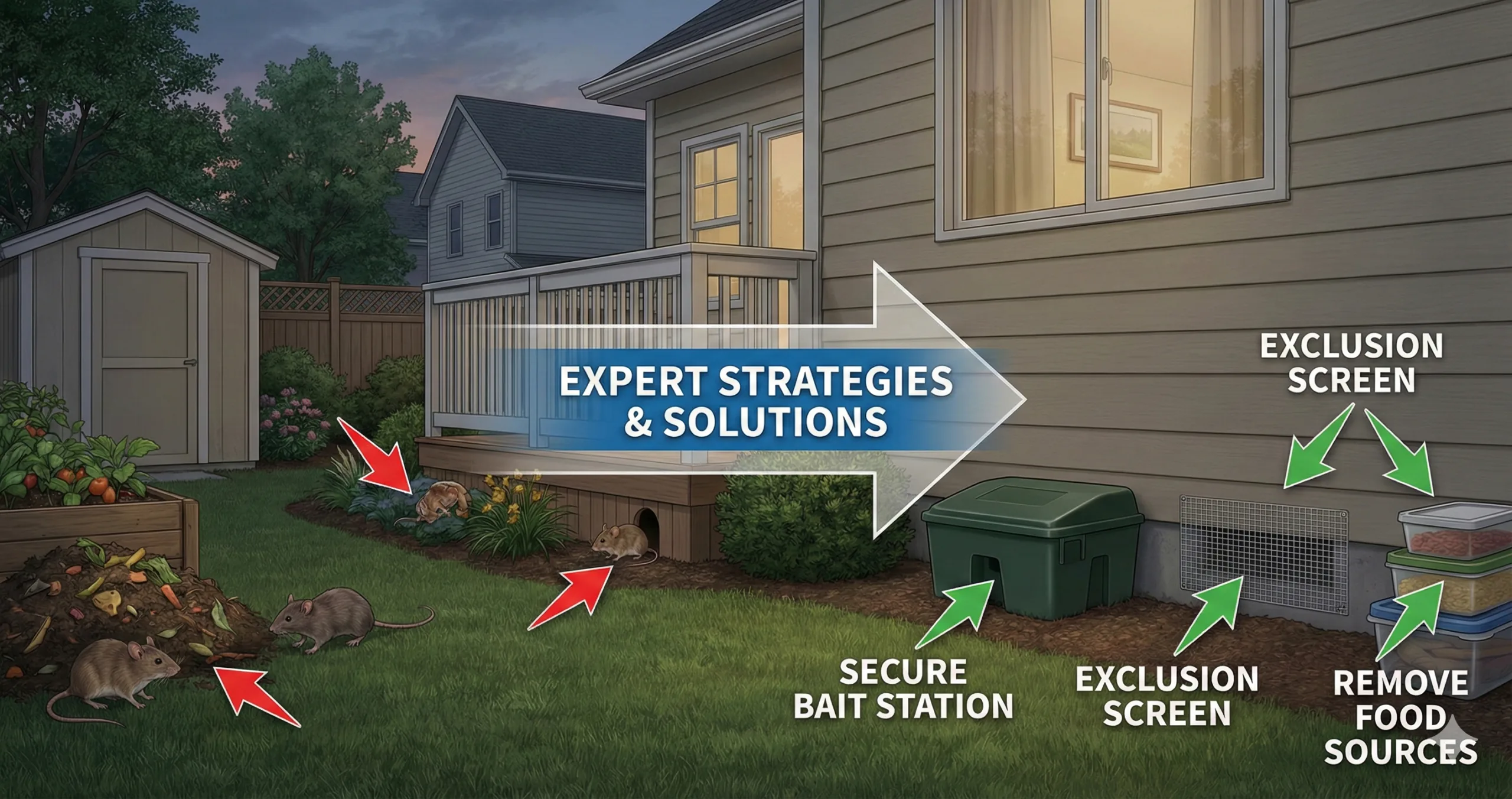
While every property is different, certain methods consistently outperform others when applied correctly. Below are the most dependable strategies used in professional outside rodent control.
1. Bait Stations for Population Reduction
Exterior bait stations are tamper-resistant devices placed around your property to target rodents where they travel. When monitored and maintained by trained professionals, they significantly reduce outdoor rodent populations.
2. Exclusion and Structural Fortification
Even the best rodent treatments won’t work long-term if rodents can still enter structures. Exclusion focuses on sealing and reinforcing vulnerable areas such as:
- Gaps around pipes and vents
- Openings under decks and patios
- Crawl space access points
- Gaps in siding or foundation transitions
3. Habitat Modification
Rodents need three things: food, water, and shelter. Removing these makes your property far less appealing.
Examples of Habitat Modification
- Trimming vegetation away from structures
- Removing clutter and storing items off the ground
- Keeping grass cut short
- Managing fruit fall from trees
- Securing garbage and compost
4. Monitoring and Ongoing Prevention
Rodent control is not a one-time service. Ongoing monitoring ensures early detection of activity spikes—especially as seasons change or nearby construction disrupts wildlife habitats.
Outdoor Rodent Control Tips You Can Start Today
While professional service offers the strongest protection, homeowners can take several steps to immediately limit rodent activity.
Maintain a Clean and Uncluttered Yard
- Secure garbage cans with locking lids
- Remove unused materials, equipment, and debris
- Switch to rodent-proof bird feeders or reduce feeding
Address Moisture and Drainage Issues
- Repair irrigation leaks
- Fix low spots that collect water
- Store pet water bowls indoors overnight
Eliminate Easy Food Sources
- Keep pet food indoors
- Clean grills, patios, and outdoor cooking areas
- Pick up fallen fruits, nuts, and seeds
Why Homeowners in Idaho Choose ProGuard for Reliable Outdoor Rodent Control
ProGuard Pest Control is committed to protecting homes and families across Eagle, Meridian, Star, Garden City, Emmett, and Boise. As a locally owned and veteran-operated company, we understand the local environment and provide services designed specifically for our climate and communities.
- No contracts — You stay because you’re satisfied, not locked in.
- 100% satisfaction guarantee — We stand behind every service.
- Family and pet-safe methods — Your safety is our priority.
- Local expertise — We understand Idaho rodents and how they behave.
Whether you’re dealing with ongoing outdoor activity or want a proactive plan that keeps rodents away year-round, ProGuard Pest Control delivers trustworthy solutions that work.
Frequently Asked Questions About Outdoor Rodent Control
How do I know if rodents are active in my yard?
Common signs include burrows, droppings, gnaw marks, grease trails along fences, and nighttime noises. If you see any of these indicators, outdoor rodent control should begin immediately.
Can I manage outdoor rodent issues without professional help?
You can reduce activity with yard maintenance, sanitation, and removing food sources. However, long-term control and population management typically require professional tools and expertise.
Are outdoor rodent treatments safe for pets?
When applied correctly using tamper-resistant devices and professional placement, modern exterior rodent treatments are designed to be pet-safe.
How often should outdoor rodent control be performed?
Most homes benefit from quarterly exterior treatments and continuous monitoring, especially in areas with high rodent activity or seasonal spikes.
Do rodent populations change with the seasons?
Yes. Activity often increases in fall and winter as rodents seek shelter and food. Spring and summer can also bring spikes due to breeding cycles, making year-round prevention essential.
For dependable, long-lasting protection around your home, contact ProGuard Pest Control today. Our local team is ready to help you create a rodent-free outdoor environment—without contracts, without hassle, and with solutions proven to work.