

Protecting your home from rodents starts long before they ever set foot inside. Effective exterior rodent control is all about creating a strong, long-lasting barrier around your property—one that keeps mice, rats, voles, and other pests far away from your foundation, yard, and outbuildings. In this complete guide, you’ll learn what attracts rodents outdoors, how to remove those attractants, and what truly works when it comes to preventing infestations that repeatedly return. As a locally owned and veteran-owned company serving Eagle, Meridian, Star, Garden City, Emmett, and Boise, ProGuard Pest Control brings years of hands-on expertise in exterior rodent control that lasts.
Why Exterior Rodent Control Matters for Lasting Protection
Rodents rarely appear indoors out of nowhere—they almost always begin their journey somewhere outside your home. When yards, sheds, and exterior structures provide shelter, warmth, or food, rodents can reproduce rapidly and eventually find their way inside. Focusing on proper outside rodent control is one of the most effective long-term strategies to prevent costly interior damage.
How Outdoor Environments Influence Rodent Activity
Rodents are incredibly adaptable. Tall grass, clutter, gaps under porches, and even pet food bowls serve as invitation points. When these conditions exist, rodent pressure increases around the home’s perimeter, raising the likelihood of an indoor infestation later.
The Link Between Exterior Conditions and Indoor Infestations
Most indoor rodent issues originate from outdoor nests. By reducing exterior attractants and sealing access points, you control the problem before it begins. This proactive approach is more effective—and more affordable—than repeated indoor treatments.
Understanding Rodent Behavior for Better Outside Rodent Control
To build an effective rodent control plan, it helps to understand what motivates rodents in the first place.
Rodent Food Sources Around Your Yard
- Bird seed and fallen feeder debris
- Pet food left outdoors
- Compost piles and open garbage cans
- Fruit trees and vegetable gardens
Removing or securing these food sources plays a major role in reducing rodent activity.
Nesting Sites Rodents Love
- Wood piles and stacked lumber
- Sheds, garages, and barns with gaps
- Brush piles or overgrown landscaping
- Decks and porches with open crawl spaces
When these areas are cleaned, elevated, or repaired, your yard becomes far less appealing to rodents.
Travel Patterns and Entry Attempts
Rodents prefer traveling along edges—fence lines, foundation walls, and hardscape borders. They avoid crossing open spaces where predators can see them. Understanding this helps place traps, barriers, and deterrents precisely where they’ll have the biggest impact.
Exterior Rodent Control Inspection: What Homeowners Should Look For
A thorough rodent control inspection outside your home forms the foundation of any long-lasting prevention plan. Whether you’re doing a DIY inspection or working with ProGuard Pest Control, these are the priorities.
Signs of Rodent Activity Around Your Property
- Droppings near garages, sheds, or patios
- Gnaw marks on doors, hoses, garden tools, or wood structures
- Runways through grass along fences or foundations
- Burrows under sheds, decks, or concrete slabs
- Nesting materials such as shredded paper or leaves
Entry Points to Identify and Seal
Rodents only need a tiny opening to enter—mice can fit through gaps smaller than a dime. During an exterior inspection, focus on:
- Foundation cracks
- Vent openings without screens
- Gaps around plumbing or HVAC lines
- Openings under siding
- Door and garage weatherstripping
Assessing Yard Conditions and Vulnerabilities
Examine landscaping, wood piles, irrigation areas, and ground vegetation. Overgrown or unmaintained zones may create ideal rodent shelter.
How to Implement Effective Exterior Rodent Control That Lasts
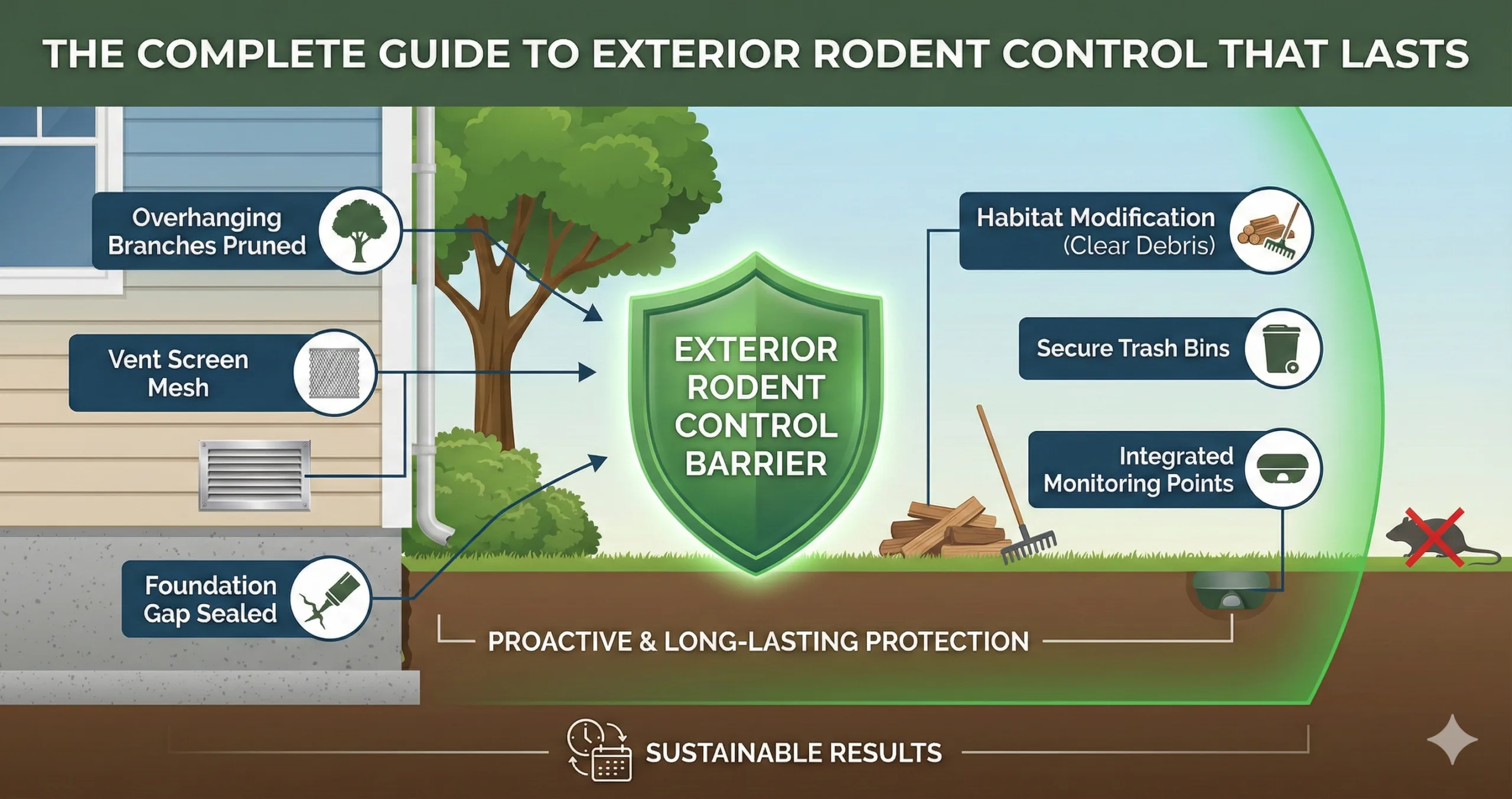
With inspection results in hand, it’s time to build a prevention plan that keeps rodents away year-round. Long-lasting outside rodent control combines habitat modification, exclusion, and careful monitoring.
1. Remove Food Sources to Reduce Attraction
Proper sanitation outdoors is one of the simplest and most effective rodent deterrents. Consider these steps:
- Store bird seed in sealed metal containers
- Use rodent-resistant feeders
- Keep pet food indoors
- Secure garbage cans with tight lids
- Harvest fruit trees promptly and remove fallen fruit
2. Eliminate Shelter and Hiding Spots
Rodents thrive where they can hide. Keeping your yard clean and open helps prevent nesting.
- Elevate firewood at least 18 inches off the ground
- Thin dense shrubs and trim branches touching the home
- Remove unused lumber or building materials
- Clean under decks and porches
3. Seal Exterior Entry Points
Exclusion is the most reliable long-term rodent control method. Focus on sealing any gap or crack that rodents can use to access structures.
Materials Often Used to Block Entry
- Metal flashing
- Steel mesh or hardware cloth
- Exterior-grade sealants
- Weatherstripping for doors and garages
4. Use Outdoor Rodent Control Devices Strategically
Depending on your situation, tamper-resistant bait stations, snap traps, and monitoring tools may be used around the perimeter. ProGuard Pest Control uses family- and pet-safe methods to ensure safety while keeping rodent populations under control.
5. Maintain Landscaping for Ongoing Protection
Healthy landscape maintenance supports long-term rodent prevention:
- Keep grass trimmed short
- Remove leaf piles in the fall
- Use gravel or rock near foundations
- Install rodent guards around shed bases
Seasonal Considerations for Long-Term Exterior Rodent Control
Rodent behavior changes with the seasons, meaning your outdoor pest control strategy should adapt as well.
Spring: Population Growth Begins
Rodents breed quickly in spring, making this an ideal time for preventive action. Seal new entry points and eliminate early nesting sites.
Summer: Food Sources Are Abundant
Gardens, fruit trees, and compost often spike rodent activity. Monitor outdoor food sources closely.
Fall: Rodents Seek Warmth
This is the most critical time for exterior rodent control. Seal access points before rodents move indoors to escape the cold.
Winter: Prevent Interior Incursions
With limited food outdoors, rodents are more likely to test your home’s exterior defenses. Keep your perimeter sealed and clean.
Professional Exterior Rodent Control: Why Homeowners Choose ProGuard Pest Control
While DIY efforts can help, professional outdoor rodent control delivers much more comprehensive, long-lasting results—especially when rodent pressure is high or structural vulnerabilities exist.
Local Expertise That Makes a Difference
ProGuard Pest Control is locally owned and operated, with deep knowledge of Idaho’s rodent species and seasonal patterns. Our on-the-ground experience in Eagle, Boise, Meridian, Star, Garden City, and Emmett ensures every treatment plan fits the environment perfectly.
Veteran-Owned Values You Can Trust
Integrity, precision, and accountability guide everything we do. Our military background helps us deliver dependable, detail-oriented service for every customer.
No Contracts and a 100% Satisfaction Guarantee
We believe homeowners should choose us because of results—not paperwork. That’s why we offer flexible service with no contracts and a full satisfaction guarantee.
Family- and Pet-Safe Solutions
Your family’s safety comes first. All treatments and materials used in our rodent control programs are selected to protect pets, children, and wildlife.
Comprehensive Rodent Control Inspection and Treatment Plans
Our approach includes:
- Thorough exterior inspections
- Rodent pressure analysis
- Customized exclusion work
- Perimeter monitoring
- Habitat modification recommendations
- Ongoing protection options
Exterior Rodent Control Tips for Boise and Surrounding Areas
Homes across Ada and Gem County face unique challenges due to weather patterns, irrigation systems, and natural landscapes. Here’s what local homeowners should focus on:
High-Risk Areas in Idaho Homes
- Large rural properties with livestock
- Yards with heavy irrigation or standing water
- Homes backing up to open fields or river corridors
- Older structures with foundation gaps
Community Factors That Influence Rodent Activity
Construction zones, nearby farms, and seasonal temperature swings can drive rodent populations toward neighborhoods. Consistent monitoring is crucial.
Long-Term Rodent Prevention: What Actually Works
Exterior rodent control isn’t a one-time task—it’s an ongoing strategy. These best practices dramatically reduce the likelihood of infestations:
Integrated Prevention Checklist
- Seal all exterior gaps annually
- Keep vegetation trimmed and away from the home
- Secure all food sources outdoors
- Monitor high-risk areas regularly
- Work with a professional for inspections
The Power of Consistency
Rodents reproduce quickly, and even small lapses in outdoor sanitation or maintenance can lead to infestation. Consistent preventive effort provides the greatest long-term benefits.
Frequently Asked Questions
How do I know if I have rodents outside my house?
Look for droppings, gnaw marks, burrows, greasy rub marks, and runways through vegetation. A professional inspection can confirm activity quickly.
What is the best method for long-term exterior rodent control?
Exclusion, habitat modification, and consistent perimeter monitoring work together to create long-lasting protection. No single method works alone.
Can rodents enter my home even if I only see them outside?
Yes. Outdoor rodents often transition indoors when conditions change. This is why sealing entry points and reducing exterior attractants is crucial.
Are outdoor rodent treatments safe for pets?
Yes. ProGuard Pest Control uses pet-safe and family-friendly methods, including tamper-resistant stations.
How often should I schedule an exterior rodent control inspection?
At least once a year, and ideally twice—spring and fall are the best times for inspections.
If you want exterior rodent control that truly lasts, ProGuard Pest Control is ready to help. As a locally owned and veteran-owned company with no contracts, a 100% satisfaction guarantee, and family- and pet-safe methods, we deliver long-term protection you can trust. Contact us today to schedule your professional rodent control inspection and keep your property rodent-free year-round.