

It usually starts after the house goes quiet. You’re lying in bed and there it is: a light scratching, a little scurry, then nothing. Ten minutes later it’s back, somewhere behind the drywall near the headboard or in the wall by the kitchen. Mice in the walls are one of the most common calls we get once fall hits the Treasure Valley, and the first question is almost always the same. Can an exterminator actually get them out of there?
Yes. But it helps to understand what “getting them out” really means, because the mice in your walls aren’t living in the walls by accident. They found a way in, and that path is the key to the whole job.
Why Mice End Up Inside Walls
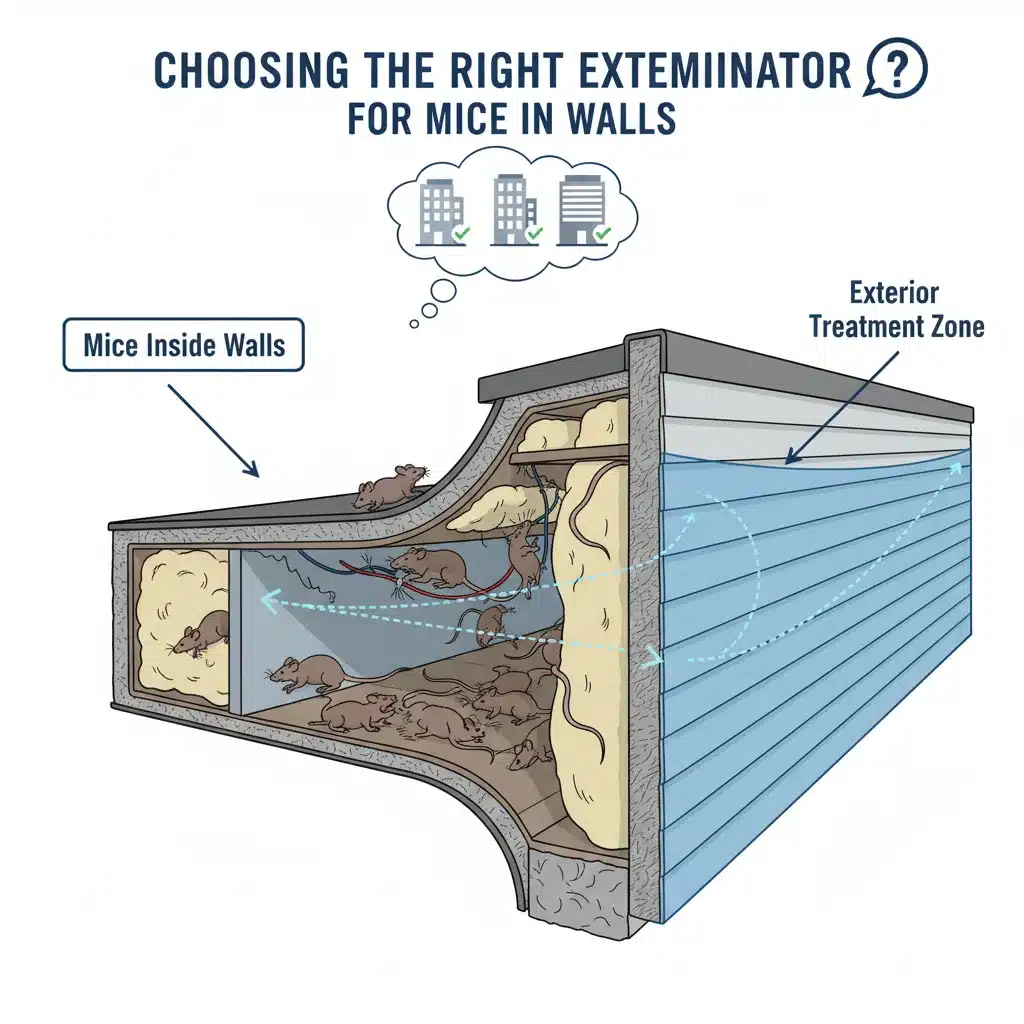
Wall cavities are about perfect for a mouse. They’re warm, dark and protected, and they connect to everything: the attic, the crawl space, the kitchen cabinets and the gap behind the dishwasher. Plumbing and wiring runs act like hallways. A mouse can travel from a gap by the hose bib up through the wall to a nest in the attic insulation without ever stepping into a room.
In older Boise and Caldwell homes, we commonly find them coming in through settled foundation cracks, worn crawl-space vent screens and gaps where siding meets the foundation. In newer subdivisions out in Meridian and Star, homes often back up to open fields, and the entry point is more likely a garage door corner or an unsealed utility line where the AC refrigerant lines pass through the wall.
Signs the Noise Really Is Mice
Plenty of things make noise in a house, so it’s worth checking before you assume. Mice are usually the answer when you notice:
- Scratching or light scurrying that picks up in the evening and at night
- Droppings about the size of a grain of rice under sinks, in drawers or along baseboards
- Small chewed holes at the back of a lower cabinet or around pipes
- Grease rub marks along the bottom of walls where they travel the same path every night
- A musty smell inside a cabinet that doesn’t go away
If the droppings look bigger, more like a raisin, you may be dealing with rats instead. Our rodent identification guide shows the difference.
How a Professional Handles Mice in the Walls
Nobody is tearing out your drywall to chase a mouse. The work happens around the wall, not inside it.
1. Finding how they’re getting in
A good technician starts outside. They walk the foundation, check the garage door seals, look at every pipe and wire that goes through the siding, and look at vents and the roofline. Inside, they check under sinks, behind appliances and in the attic or crawl space where they can reach. The goal is to find the active routes, not just the obvious gaps.
2. Trapping where the mice are traveling
Mice in the walls still come out to eat. Traps go along the routes they’re using: under sinks, behind the fridge and stove, in the garage, and in the attic or crawl space if there’s activity there. Placement is most of the job. A trap in the middle of a floor rarely catches anything. A trap tight against the wall on a travel route usually does.
3. Sealing the entry points
This is the step that keeps the problem from repeating every winter. Gaps get closed with materials mice can’t chew through, like steel mesh, metal flashing and hardware cloth, not just spray foam, which they chew straight through. We wrote a full walkthrough of how rodent sealing works if you want the details.
4. Checking back
Once traps stop catching and the noise goes quiet, you’ll know the population inside is handled. If activity picks back up, that usually points to an entry point that was missed, and that’s where the technician looks next.
How Long It Takes
For a typical house with mice in a wall or two, activity often slows within a few weeks once trapping and sealing are underway. Bigger or longer-running problems take longer, especially if the mice have been nesting in the attic. How fast it goes depends on how many entry points there are and how long the mice have been settled in.
If they’ve been up in the attic, the insulation may need attention too. We cover that, including what drives the cost, in our post on rodent in attic removal.
What You Can Do in the Meantime
- Keep pet food and grass seed in sealed bins, and don’t leave dog food out overnight.
- Store pantry staples in hard containers instead of bags and boxes.
- Check the bottom corners of the garage door for daylight.
- Don’t sweep or vacuum dry droppings. Follow the CDC’s guidance for cleaning up after rodents, which recommends wetting droppings with disinfectant and wiping them up with gloves on.
Choosing the Right Help
When you call around, ask how the company finds entry points, whether sealing is part of the plan, and what happens if the mice come back. A company that only sets traps and leaves is treating the symptom.
Rodent service is included at no extra cost with quarterly service plans; traps and materials are billed separately. It’s part of our residential pest control, and we also offer bi-annual and one-time service. On a quarterly service plan and not satisfied between scheduled services? We’ll come back for a free return visit at no additional cost. We don’t use contracts, and you can cancel with 30 days’ notice.
Get the Scratching Stopped
ProGuard is based in Eagle and handles mice in homes all over the valley, from Boise and Garden City to Meridian, Nampa, Caldwell, Star, Middleton and Emmett. If you’re hearing something in the walls, call us at (208) 352-2062 or reach out online and we’ll talk through what’s going on.