Local, family and veteran owned · Eagle, IDMon to Sat, 9 AM to 6 PM.
In short: The western conifer seed bug is a large, brown true bug that feeds on the seeds of pines and other conifers, then looks for a place to spend the winter in walls, attics and around windows. People often mistake it for a stink bug.
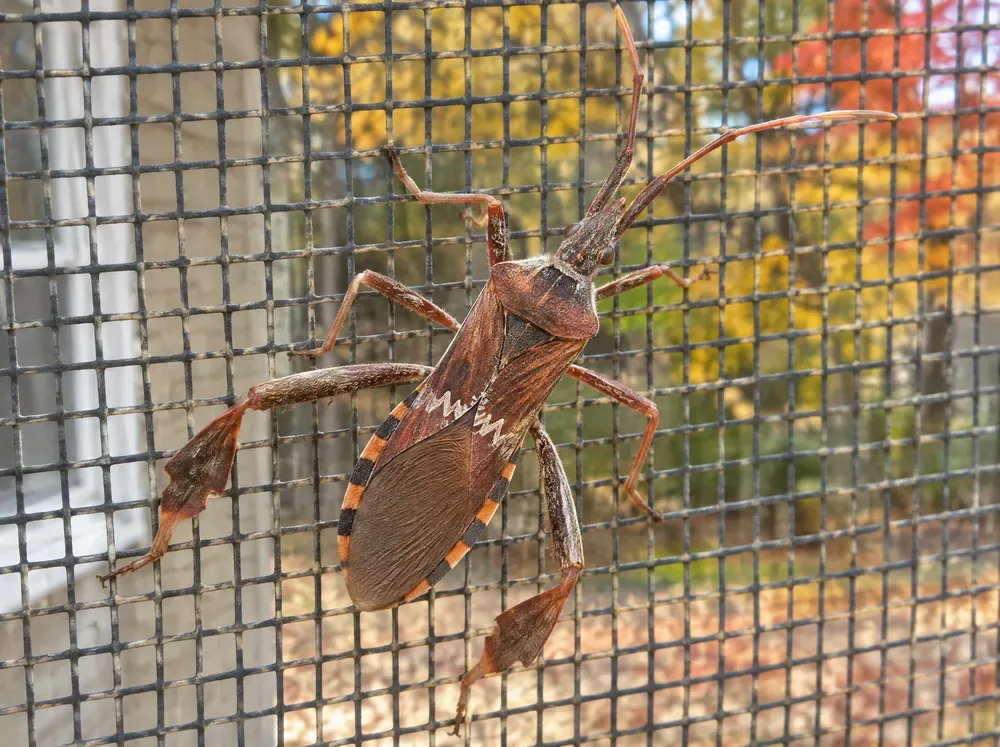
Western conifer seed bugs (Leptoglossus occidentalis) are about 3/4 inch long, reddish brown to gray-brown, with a narrow white zigzag line across the midsection on many adults and a distinctive leaf-like flattening on the hind legs (they are “leaf-footed” bugs). They are longer and narrower than a brown marmorated stink bug and lack that insect’s banded antennae and broad shield shape.
When they fly they can be loud, and when they are handled they may release a defensive odor. That odor, plus their size, is why they get called stink bugs. They feed on developing cones, not on house plants or food in the pantry.
Shield-shaped, mottled brown, white bands on the antennae, no leaf-like hind legs. See that guide.
Smaller, darker, and tied to elms, mostly a summer wall nuisance. See that guide.
Black and red, usually near boxelder or maple.
These bugs are native to the West and are common wherever there are pines, spruce or other cone-bearing trees — including Eagle foothill lots, Boise foothill edges and many landscaped yards. In late summer and fall they leave the trees and look for cracks in siding, attic vents and window frames. On a warm winter or early-spring day they crawl out onto a windowsill or fly clumsily around a room.
They are overwintering nuisances, not an infestation of the pantry or the structure.
We include the sunny walls, attic vents and entry points these bugs use in quarterly exterior service, especially in late summer before they move in. Bugs already deep in a void can still appear on warm days. Quarterly plan customers get a free return visit if covered pests come back between visits. There are no contracts. We work family and pet safe. Treated areas are safe for kids and pets once they’re dry, usually about 15 to 20 minutes.
Request a free quote, or call or text 208-352-2062.
More answers in our full list of answers.
Written by the ProGuard team from the sources above. Last updated: November 17, 2026.
Call, text or send a few details. We’ll give you a free quote before any work starts, and there are no contracts.
