

Meridian’s mix of new subdivisions, irrigated lawns, canals and open fields gives pests plenty of room to live, and the seasons decide which ones show up at the door. Some are mostly a nuisance; others can sting, contaminate food or damage wiring and insulation. Knowing what to expect each season makes it easier to stay ahead of them.
Here are five pests Meridian homeowners deal with most, when they’re active and what helps.
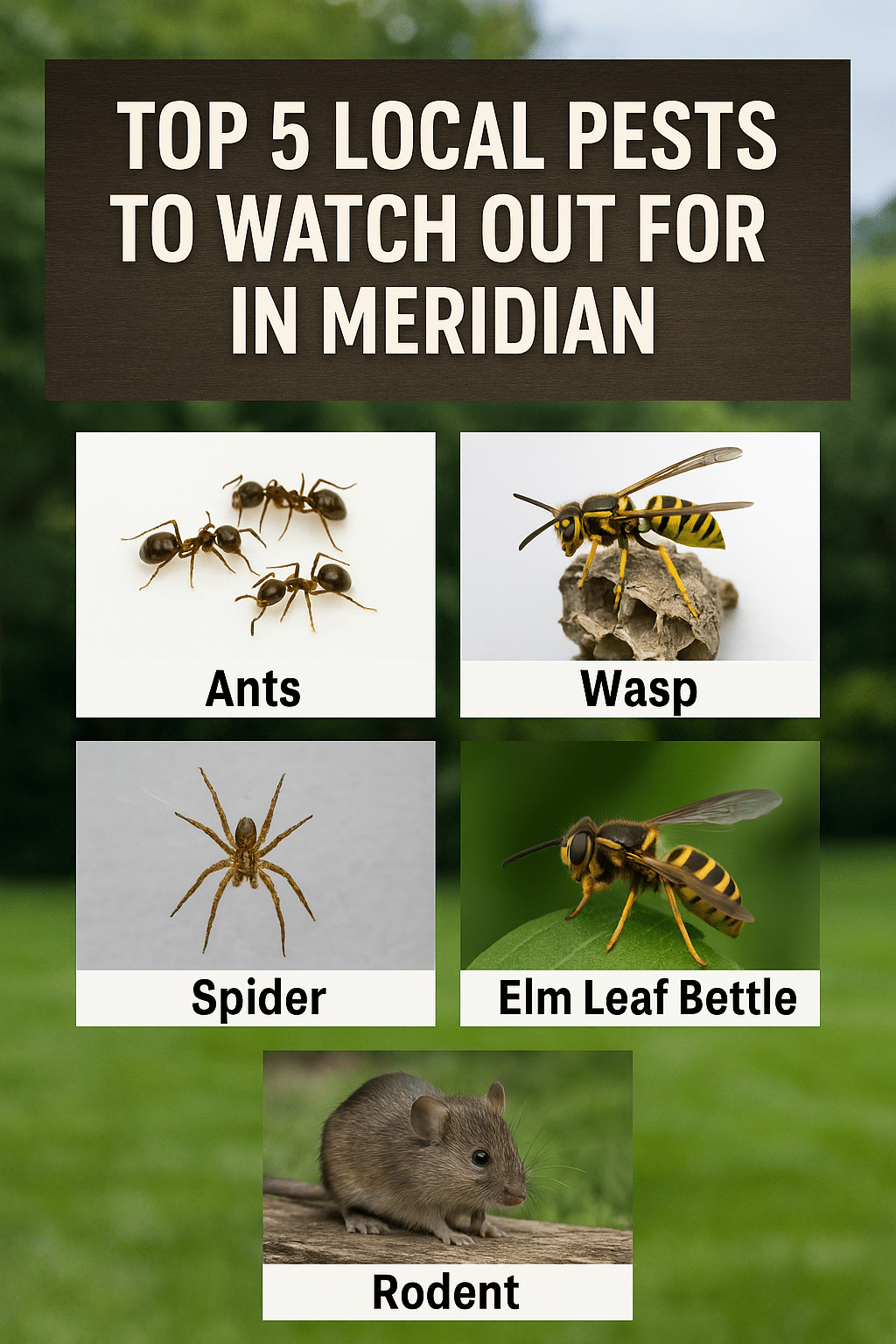
1. Ants
Odorous house ants and pavement ants are the two most common in Meridian homes. Odorous house ants are small and dark, smell like rotten coconut when crushed and form large colonies that can split when sprayed. Pavement ants nest under sidewalks, driveways and slab edges and leave little piles of sand at cracks.
When: spring through fall, peaking as soil warms in April and May. Colonies in warm wall voids can stay active indoors through winter.
What helps: keep counters and floors clean, store food in sealed containers, fix leaks, and caulk gaps where pipes and wires enter. Our ant identification guide helps you tell which you have.
2. Wasps and Hornets
Paper wasps build open combs under eaves and deck rails. Yellowjackets nest in the ground, wall voids and under decks. Bald-faced hornets build enclosed gray paper nests in trees and shrubs.
When: queens start nests in spring; colonies peak in late summer and early fall, which is when yellowjackets are most defensive and most likely to sting.
What helps: knock down small starter nests early in the season, seal gaps in siding and soffits, and keep trash and outdoor food covered. Leave ground and wall nests to a professional.
3. Spiders
The spiders most often found in Meridian homes include giant house spiders, hobo spiders, cellar spiders, wolf spiders and western black widows. Black widows are the one to take care with; they favor undisturbed spots like window wells, woodpiles, garages and crawl spaces. Brown recluse spiders are not established in Idaho, despite how often they’re mentioned.
When: year-round indoors, with a jump in late summer and fall when males wander looking for mates.
What helps: reduce clutter in garages and basements, seal gaps around doors and windows, use yellow or LED bulbs outside to draw fewer insects, and vacuum webs and egg sacs. Our spider identification guide covers the common species, and Montana State University’s Idaho hobo spider bulletin has more on hobo spiders.
4. Mice and Rats
House mice and deer mice move indoors as nights cool, and Norway rats turn up near canals, ditches and older outbuildings. Rodents contaminate food, chew wiring and insulation, and can carry disease.
Signs: droppings in drawers, pantries and along walls; chewed packaging; gnaw marks; scratching in walls or the attic at night; nesting material in storage boxes.
What helps: seal gaps around pipes, vents and garage doors (a mouse can fit through an opening about the size of a dime), store food and pet food in sealed containers, and keep woodpiles and clutter away from the house. Our post on mice in the house in winter covers what to do when they’re already inside.
5. Boxelder Bugs and Other Fall Invaders
Boxelder bugs are black with red markings and gather by the hundreds on sunny south- and west-facing walls in fall. Elm seed bugs and stink bugs behave the same way. They don’t bite or damage the house, but they crawl into wall voids and attics and turn up indoors on warm winter days.
When: late August through October as they look for winter shelter, then again on warm days through winter and early spring.
What helps: seal gaps around windows, siding and soffits before September, repair screens, and vacuum (rather than crush) the ones that get in. Our guide to fall invaders goes into more detail.
A Seasonal Checklist for Meridian Homes
- Spring: seal gaps, clear debris from the foundation, knock down starter wasp nests.
- Summer: keep food and trash covered, fix leaks and adjust sprinklers away from the foundation.
- Late summer: seal and screen before fall invaders and mice move in.
- Winter: watch for droppings, chewed packaging and spiders in basements and garages.
When to Call for Help
A few ants or one spider isn’t cause for alarm. Repeated ant trails, wasp nests in walls or the ground, signs of mice or rats, or fall invaders getting inside every year are good reasons to bring in a professional. A technician will identify what you’re seeing, find where it’s getting in and treat the outside of the house so fewer pests make it indoors.
Pest Control in Meridian
All five of these are part of our regular residential pest control plans: spiders, ants, wasps and hornets, mice, rats and fall invaders. We offer quarterly, bi-annual and one-time service. Quarterly service plan customers get free return visits. No contracts; cancel with 30 days’ notice. Rodent service is included at no extra cost with quarterly service plans; traps and materials are billed separately. We also service commercial properties, including offices, retail spaces and multifamily buildings.
ProGuard is based in Eagle and serves homes and businesses in Meridian, Boise, Nampa, Star, Caldwell, Middleton, Emmett and Garden City. Call (208) 352-2062 or contact us to schedule an inspection.