
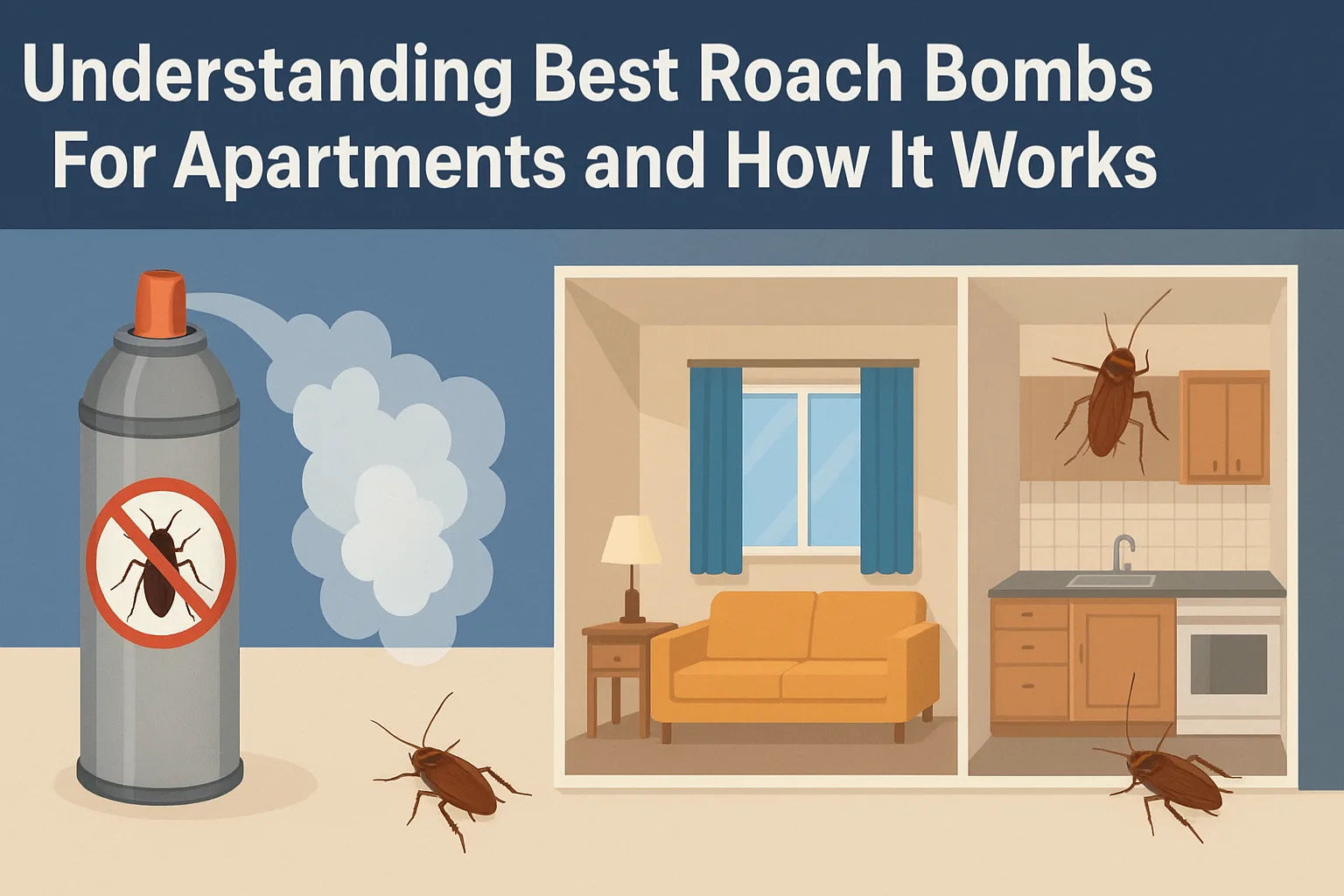
When roaches show up in an apartment, a roach bomb looks like the easy answer. Set it off, leave for a few hours, come back to a roach-free unit. The reality is different, and in an apartment building it’s usually worse than in a house. Here’s how roach bombs actually work, why they tend to fall short in apartments, and what works better for renters, landlords and property managers in the Boise area.

How a Roach Bomb Works
A roach bomb, or total release fogger, is an aerosol can that empties its whole contents at once. The insecticide fills the room as a fine mist and settles onto exposed surfaces: counters, floors, tables and the tops of cabinets. Roaches that are out in the open and contact the mist or the settled residue can be killed.
The problem is where roaches are. German cockroaches, the species behind most apartment infestations in the Treasure Valley, spend most of their time inside cabinet hinges, behind appliances, under sinks and inside wall voids. Fog settles on top of surfaces. It doesn’t push into those cracks, so most of the population never gets a meaningful dose.
Why Bombs Fall Short in Apartments
Roaches move to the neighbors
Many fogger insecticides are repellent. Roaches that sense it move away, and in an apartment, away means through the plumbing chases, electrical boxes and gaps along shared walls into the next unit. The roaches may come right back once the residue fades, or the infestation spreads to more units.
Eggs survive
A female German roach carries a protective egg case until it’s nearly ready to hatch. Fog doesn’t stop those eggs, so a fresh wave of nymphs can show up within weeks.
One unit often isn’t the whole problem
When roaches are established in a building, treating a single apartment leaves the source untouched. Effective control in multi-unit housing usually means inspecting and treating neighboring units too.
Fire and exposure risks
Foggers use flammable propellants, and using too many in a small space or setting one off near a pilot light or spark source has caused fires and explosions. Apartments are small and close together, so that risk affects more people. The EPA’s safety precautions for total release foggers cover how to use them if you do, including using only the amount the label calls for and keeping them away from ignition sources.
Should You Use a Roach Bomb in Your Apartment?
In most cases, no. If you’re a renter, check your lease and talk to your landlord or property manager first. Many buildings have rules about pesticide use, and the problem probably isn’t limited to your unit. If you go ahead anyway, read the entire label, use only the amount it lists for your space, turn off pilot lights, cover food and dishes, and stay out for as long as the label directs.
Signs the Problem Goes Beyond Your Unit
- Roaches keep showing up even though your kitchen is clean
- You see them coming from outlets, plumbing gaps or along shared walls
- Neighbors have mentioned roaches too
- Activity drops after you treat, then comes back within a few weeks
Any of these is worth reporting to your landlord or property manager.
What Works Better in Apartments
- Inspection first. Find where roaches are actually living, usually the kitchen and bathroom, and whether neighboring units are involved.
- Targeted treatment. Small amounts of product placed in cracks, crevices, hinges and voids, where roaches live, instead of a fog over open surfaces. Professionals commonly use gel bait, insect growth regulators, dusts and non-repellent products. We explain each in what chemicals exterminators use for roaches.
- Sanitation. Nightly dishes, wiped counters, sealed food, no cardboard storage and fixing drips under the sink.
- Monitoring. Sticky traps show whether numbers are falling and where activity remains.
- Coordination. Treating adjoining units at the same time keeps roaches from just moving next door.
If you’re not certain you’re dealing with German roaches, our cockroach identification guide can help. For a broader look at how bug bombs work in houses as well as apartments, see our guide to roach bombs.
For Landlords and Property Managers
Roaches in one unit are a building problem. Tenants setting off foggers on their own can push roaches into more units and add fire risk. A building-wide approach with inspection, targeted treatment of affected and adjoining units, monitoring and tenant prep instructions tends to get better results. We work with apartment owners and property managers through our commercial pest control in Boise and throughout the valley.
How ProGuard Handles Roaches
For homes, roach treatment is its own separate service. It isn’t covered by the quarterly plan in our residential pest control. We inspect, treat the harborage areas directly and schedule follow-up visits as needed, based on what monitoring shows.
ProGuard is based in Eagle and serves Boise, Meridian, Nampa, Caldwell, Star, Middleton, Emmett and Garden City. If roaches are showing up in your apartment or building, call us at (208) 352-2062 or send us a message.