Local, family and veteran owned · Eagle, IDMon to Sat, 9 AM to 6 PM.
In short: Larder beetles are oblong, dark beetles with a pale band across the wing covers. Their larvae feed on dried animal material: pet food, hides, dried meats, and sometimes a dead animal in a wall or attic. They sit between carpet beetles (fabrics and lint) and pantry beetles (dry plant foods) in the Pest Library.
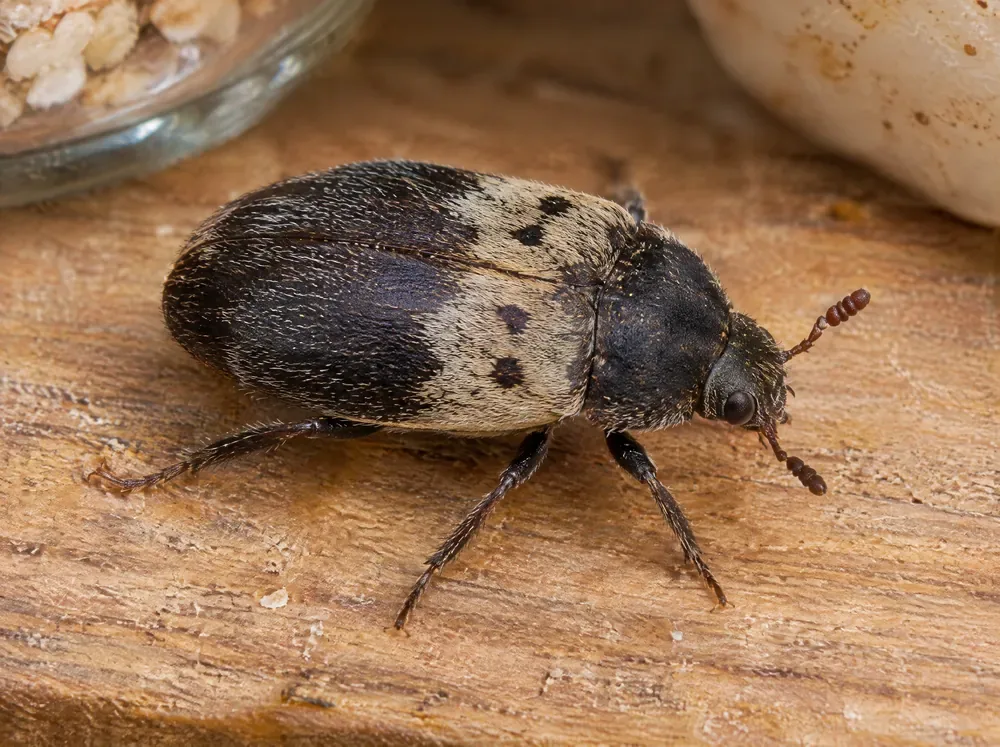
Adult larder beetles are about 1/3 inch long, dark brown to black, with a wide, pale yellowish or tan band across the front half of the wing covers, and small dark spots in that band. Larvae are brown, bristly and tapered, and they can bore into hard materials when they are ready to pupate.
Carpet beetles are smaller and rounder and usually associated with wool, lint and carpets. Drugstore and cigarette beetles are much smaller pantry beetles in dry plant foods and spices. If you are finding larger banded beetles near pet food, a garage freezer, a nest or a wall void, larder beetle is a likely name.
Smaller and more rounded; usually a fabric and lint pest. See the carpet beetle guide.
Much smaller, in spices and dry packaged foods. See those pantry guides.
Close relatives with a similar diet. The work — find the food source — is the same.
Larder beetles show up in Treasure Valley homes when there is a protein source: a bag of pet food in the garage, a forgotten dried mess, old insect accumulations in an attic, or a rodent or bird carcass in a wall. They can also come from a nest. Eagle, Meridian and Boise garages with pet food and wildlife around the roofline are typical settings.
Adults fly to lights and may appear in a room some distance from the actual source. The useful step is always to find what they are feeding on, not only to treat the beetle on the windowsill.
When larder beetles are in the house, we look for the source — pet food, a nest, a carcass in a void, or another protein site — and we treat the areas where they are active as part of helping you get the infestation under control. If rodents caused the problem, rodent service is included with quarterly plans; traps and materials are billed separately, and we seal entry points. Quarterly plan customers get a free return visit if covered pests come back between visits. There are no contracts. We work family and pet safe. Treated areas are safe for kids and pets once they’re dry, usually about 15 to 20 minutes.
Request a free quote, or call or text 208-352-2062.
More answers in our FAQ page.
Written by the ProGuard team from the sources above. Last updated: November 17, 2026.
Related in this section: Elm Leaf Beetles, Ground Beetles.
Call, text or send a few details. We’ll give you a free quote before any work starts, and there are no contracts.
