Local, family and veteran owned · Eagle, IDMon to Sat, 9 AM to 6 PM.
In short: carpet beetles are tiny round beetles, about 1/8 inch long, that fly in from outdoors and lay eggs on wool, silk, fur, feathers and lint. The fuzzy larvae do the damage, chewing holes in rugs, sweaters and stored clothing. Regular vacuuming, cleaning stored fabrics and sealing them in tight containers are the main fixes.
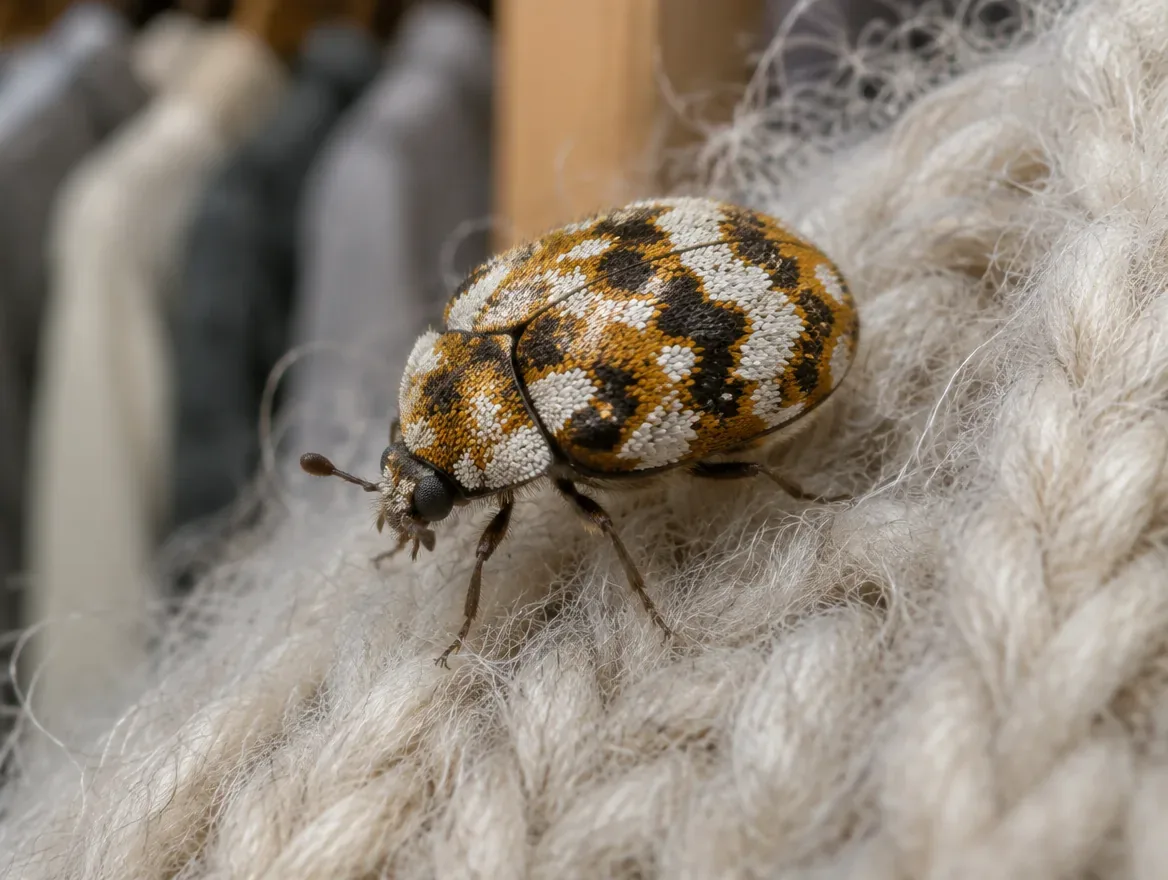
The adults are what you see first, usually on a windowsill in spring. UC IPM describes them as small, about 1/8 to 1/10 inch, with round bodies and short antennae. The varied carpet beetle is mottled with white, brown and yellow scales, and the black carpet beetle is plain, shiny black and a little more oval.
The larvae are the real pests. They are slightly longer than the adults and look like fuzzy or hairy little grubs, banded light and dark brown. Instead they leave behind shed skins and droppings about the size of a grain of salt, which show where they have been feeding.
Carpet beetle larvae leave fuzzy shed skins instead.
Grain and flour beetles live in stored food in the kitchen, not in rugs and closets.
Larger, shiny, dome shaped and usually orange or red with spots.
UC IPM says adult carpet beetles feed on pollen and nectar and are mostly found outside on flowers. In spring and early summer they fly in through open windows and doors and on cut flowers, then lay eggs on anything that can feed the larvae: wool rugs, sweaters, furs, felt, feathers, silk, animal hair and the lint that builds up under furniture and in heat vents.
The larvae prefer dark, undisturbed places and can feed for a long time. For the varied carpet beetle, UC IPM reports larvae living from about 220 to 630 days before they pupate. That long, hidden feeding stage is why damage shows up months after the adults are gone.
Carpet beetles do not bite and do not carry disease. The harm is to belongings: woolens, rugs, keepsakes and anything made from animal fibers. Some people get an itchy rash from contact with the tiny hairs on the larvae. If a rash does not clear up, see a doctor.
Most carpet beetle problems take two things: finding every spot the larvae are feeding and keeping new adults from flying in. We help you find the sources, treat the cracks and edges where the larvae hide and treat the outside of the house where the adults come in. Carpet beetles are covered pests on our residential plans.
Quarterly visits keep the protection up, and quarterly plan customers get a free return visit if covered pests come back between visits. There are no contracts. We work family and pet safe. Treated areas are safe for kids and pets once they’re dry, which is usually about 15 to 20 minutes.
Learn more on our residential pest control details page, or use our online quote form.
Ladybugs gathering on sunny walls and windows every fall.
Lady beetle: signs and look alikesTiny brown beetles in flour, cereal and dry goods.
Read about the grain and flour beetlesTwo-toned moths that come from pantry food, not plants or drains.
Indian meal moth guideSee what the service includes and how it works.
How our residential pest control worksAlso in this section: Elm leaf beetle, Ground beetle, Larder beetle. Local pages: Boise and Garden City.
Back to all beetles in Idaho.
Written by the ProGuard team from the sources above. Last updated: November 17, 2026. This page is general information, not medical advice. If you are worried about a bite or your health, talk to a doctor.
Call, text or send a few details. We’ll give you a free quote before any work starts, and there are no contracts.
