Local, family and veteran owned · Eagle, IDMon to Sat, 9 AM to 6 PM.
In short: Booklice (psocids) are tiny, pale insects that live on mold and starch in humid places. They are not lice, and they do not bite people. They show up in new construction, damp storage rooms, and sometimes in dry goods that have picked up moisture. The underlying issue is humidity, not a dirty house.
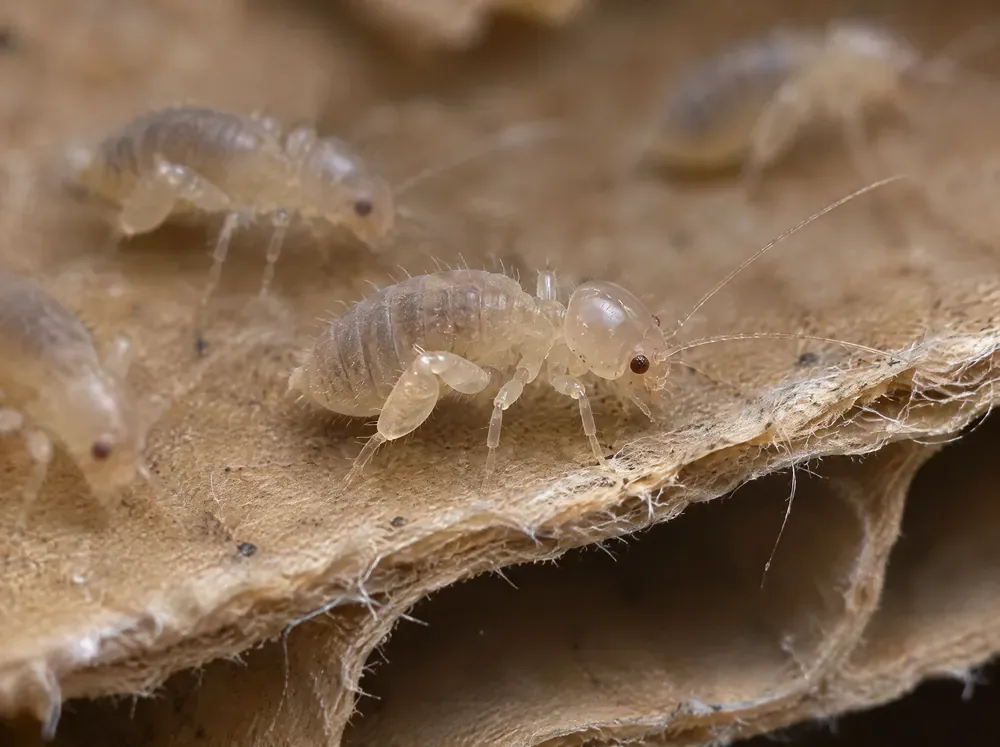
Booklice are usually less than 1/16 inch long, soft, and pale gray or white. Many indoor species in the genus Liposcelis are wingless, so they look like moving specks on a windowsill, a cardboard box, or the surface of a slightly damp book or box of food. They do not jump like springtails, and they are much smaller than silverfish or firebrats.
The name is misleading. They are psocids, not parasitic lice, and they have nothing to do with head lice. They graze on microscopic mold and on starchy sizing in paper and boxes.
Also tiny, but they jump and are usually in wet soil or window wells, not on a closet shelf. See that guide.
Much larger, carrot-shaped, with three tails.
If the problem is clearly inside a food package, see the pantry-pest guides as well; booklice can also appear in slightly damp dry goods.
Booklice often appear in new Treasure Valley construction or in a recently finished basement, when building materials and drywall still hold moisture. They also appear in storage rooms, closets and garages that stay humid, and sometimes in Meridian or Boise homes after a leak or a long period of closed-up damp weather.
Once the space dries, populations usually collapse. A flush of tiny pale insects on windows or boxes in a new house is a classic booklouse pattern.
When booklice persist, we look at the humid room or material that is supporting them and include treatment of the affected areas in our service, along with regular quarterly coverage of the house. We will be honest that drying the space is what ends most booklouse problems. Quarterly plan customers get a free return visit if covered pests come back between visits. There are no contracts. We work family and pet safe. Treated areas are safe for kids and pets once they’re dry, usually about 15 to 20 minutes.
Request a free quote, or call or text 208-352-2062.
More answers in our pest control FAQ.
Written by the ProGuard team from the sources above. Last updated: November 17, 2026.
Call, text or send a few details. We’ll give you a free quote before any work starts, and there are no contracts.
