Local, family and veteran owned · Eagle, IDMon to Sat, 9 AM to 6 PM.
In short: The western harvest mouse is a small field mouse with a long tail and grooved upper incisors. It lives in grass and weeds along fields, ditches and fence lines, and it sometimes moves into garages, shops and sheds at the edge of towns like Star and Middleton.
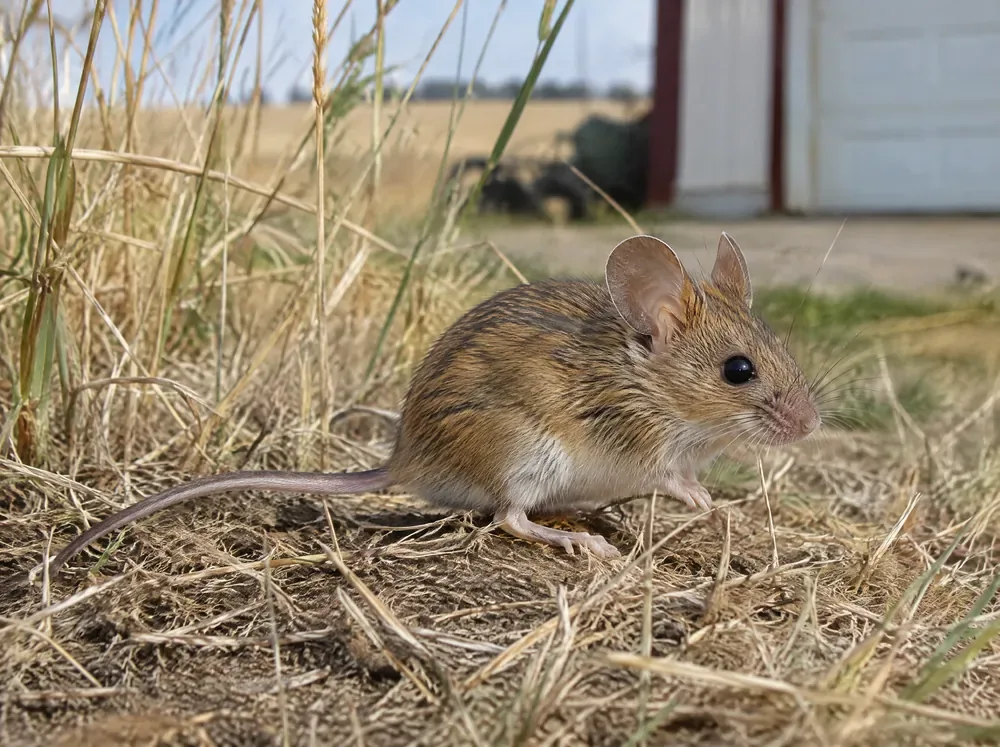
Western harvest mice are slight, typically brown to buff on top and paler below, with a long, sparsely haired tail. Adults are smaller and more delicate than a house mouse. The field mark specialists use is a groove down each upper incisor. In a quick look in a garage, that is easy to miss, which is why these mice get called house mice or deer mice.
House mice are the species that nest in walls and live on indoor food. Deer mice are two-toned with a sharply bicolored tail and are important to identify because of hantavirus risk in droppings and nests. Harvest mice are grassland animals. A mouse in a kitchen is still most often a house mouse. A small mouse in a shop, barn or garage that sits against a field or ditch is where a harvest mouse becomes a reasonable possibility.
The usual indoor mouse in Treasure Valley homes. Slightly sturdier, nests in walls and lives on indoor food. See the house mouse guide.
Sharply bicolored body and tail, white undersides. Important to distinguish because of hantavirus risk in urine, droppings and nests. See the deer mouse guide.
Stocky, short tails, mostly in lawns and gardens, not climbing into cupboards. Vole control is not part of the quarterly plan. If you’re dealing with voles, call or text and we’ll give you a free quote.
Western harvest mice are native field mice across much of the West, including the Treasure Valley’s remaining grassland and farm edges. They are a Star and Middleton story more than a downtown-Boise story: lots that back up to canals, laterals, pastures and harvested fields, plus acreages with shops and parked equipment.
They stay outdoors for most of the year in grass and weeds. In fall, when cover is cut or the weather cools, a few move into garages, sheds and unused vehicles. They are not typically a deep-in-the-walls kitchen infestation, but once a mouse is in a building the exclusion work is the same: find the gap, seal it, and handle activity inside.
Western harvest mice are not the deer mouse, which is the species public health sources emphasize for hantavirus in this region. Any wild mouse nest or droppings should still be treated with care. Central District Health and CDC have guidance on avoiding dust from rodent droppings. This page is general information, not medical advice.
Rodent service is included with our quarterly plans. We set traps where we find activity and seal entry points so mice have a harder time coming back. Traps and materials are billed separately. That work is the same whether the mouse in the garage is a harvest mouse, a deer mouse or a house mouse — identification mainly changes how we talk about health precautions, especially if deer mice are involved.
Quarterly plan customers get a free return visit if covered pests come back between visits. There are no contracts. We work family and pet safe. If you are on the farmland edge in Star or Middleton, tell us about the shop, the ditch and the field behind the house when you call. Learn more on our rodent control page, or request a free quote.
More answers in our FAQ page.
Written by the ProGuard team from the sources above. Last updated: November 17, 2026. This page is general information, not medical advice. If you are worried about a sting, bite or your health, talk to a doctor.
Call, text or send a few details. We’ll give you a free quote before any work starts, and there are no contracts.
