Local, family and veteran owned · Eagle, IDMon to Sat, 9 AM to 6 PM.
In short: pantry weevils are small, dark beetles with a long snout. Rice and granary weevils develop inside whole kernels of rice, wheat, corn and popcorn, and bean weevils grow inside dry beans. You usually notice them as tiny holes in kernels or beetles crawling out of a bag. Throw out the infested food and store whole grains and beans sealed.
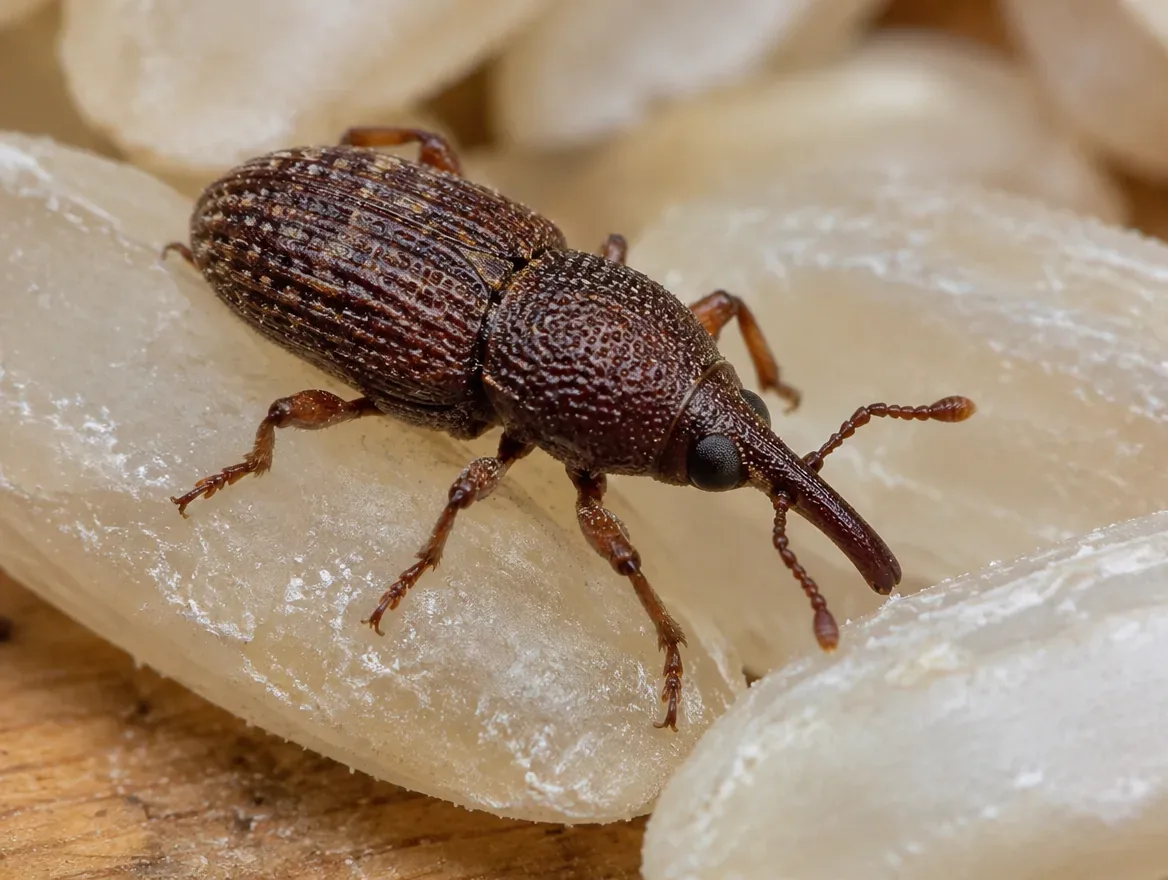
The snout is what makes a weevil. The head stretches into a long beak with tiny jaws at the tip. Rice and granary weevils are about 1/8 inch long and reddish brown to almost black. The rice weevil has four faint lighter spots on its back and can fly, while the granary weevil is plain and does not fly.
Bean weevils look different: short, rounded and gray brown, without the obvious snout. UC IPM lists bean, granary and rice weevils among the beetles that feed mainly on seeds or whole grains.
Flat, slender and brown without a snout. They feed on flour and broken or processed foods.
Round and humped, light brown, and found in spices, dried herbs and pet food.
Much bigger and brightly colored. They are found at windows, not in food.
Female weevils chew a hole in a kernel or bean, lay an egg inside and seal it. The larva eats the inside of the kernel and turns into an adult there, then chews its way out. Because all of this happens inside, a bag can look fine at the store and fill up with weevils weeks later.
Once out, adults move to other whole grains and beans nearby. Bulk bins of rice, popcorn, wheat berries and birdseed, and long stored dry beans, are common sources.
Weevils do not bite people or carry disease. The damage is to food. Kernels and beans they have been in are hollowed out and contaminated, so throw them out.
Once you throw out the infested food, most weevil problems end. If they keep coming back, we help find hidden sources, including birdseed, pet food and stored grain in the garage, and treat the cracks and shelf edges where adults hide. Pantry pests are covered pests on our residential plans.
Quarterly visits keep the protection up, and quarterly plan customers get a free return visit if covered pests come back between visits. There are no contracts. We work family and pet safe. Treated areas are safe for kids and pets once they’re dry, which is usually about 15 to 20 minutes.
Learn more on our how our residential pest control works page, or request a free quote.
Tiny brown beetles in flour, cereal and dry goods.
Read about the grain and flour beetlesTwo-toned moths that come from pantry food, not plants or drains.
Indian meal moth guideTiny mottled beetles whose fuzzy larvae chew wool and fabric.
Carpet beetle facts for IdahoSee what the service includes and how it works.
What residential pest control includesAlso in this section: Drugstore beetle, Cigarette beetle. Local pages: Nampa and Caldwell.
Back to all pantry pests in Idaho.
Written by the ProGuard team from the sources above. Last updated: November 17, 2026. This page is general information, not medical advice. If you are worried about a bite or your health, talk to a doctor.
Call, text or send a few details. We’ll give you a free quote before any work starts, and there are no contracts.
