Local, family and veteran owned ยท Eagle, IDMon to Sat, 9 AM to 6 PM.
Customer Portalemail usCall or text 208-352-2062

Millipedes in Idaho Homes

In short: millipedes are slow, round, brownish animals with two pairs of legs on most body segments that curl up when touched. UC IPM says they live in and eat rotting leaves, wood and other damp plant matter. They wander indoors in spring and fall and usually die quickly in dry rooms. Control mostly means cutting moisture near the house.

Identify it

How do you identify a millipede?

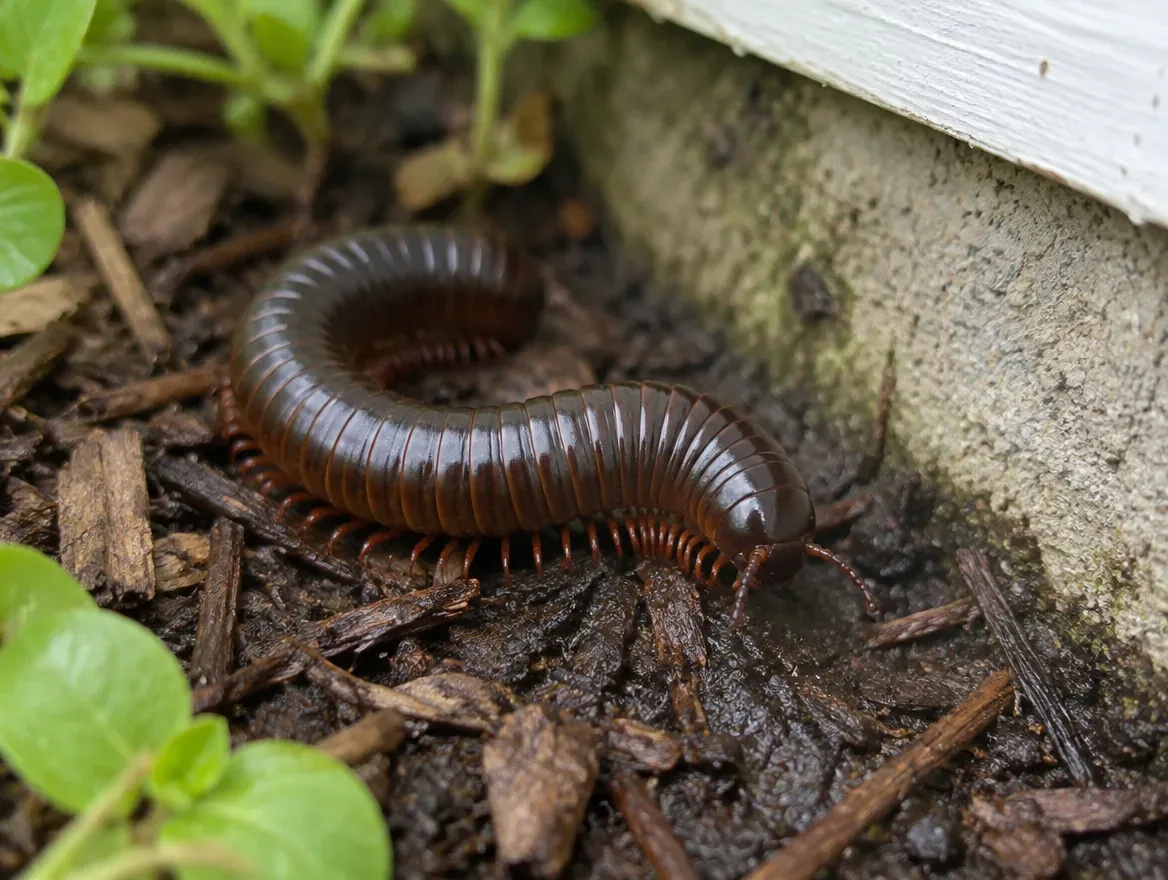
UC IPM describes millipedes as brownish, elongated and cylindrical to slightly flattened, with two (more commonly) or four pairs of tiny legs per body segment. Even the largest have fewer than a hundred legs. When they walk, the legs move in a slow wave. When prodded or at rest, most curl into a coil.

That slow, rounded, coiling look sets them apart from centipedes, which are flat, quick and hunt other insects.

At a glance

Group
Millipedes, class Diplopoda
Look
Brownish, long and round to slightly flat, with two pairs of tiny legs per segment
Legs
Fewer than 100, despite the name
Movement
Slow, with legs moving in a wave
Defense
Curl up. Some ooze a fluid that can irritate skin and eyes
Feeds on
Rotting leaves, wood and other damp plant matter
Indoors
Wander in during spring and fall
Health
Do not bite
Look alikes

What else could it be?

Centipedes

Flat and quick, with one pair of legs per segment and longer legs.

Wireworms

Click beetle larvae with only three pairs of legs, living under the soil.

Pill bugs

Short, oval and gray, with seven pairs of legs.

Where and when

Why millipedes wander into homes?

Millipedes live in moist places outdoors, under mulch, leaf litter, boards and lawn thatch, where they feed on decaying plant matter. Colorado State University Extension says they tend to move into houses for brief periods in spring or fall, often after heavy rain or as the weather changes.

UC IPM notes that millipedes that wander in usually die quickly because homes are too dry and offer no food. Seeing many of them indoors is usually a sign of heavy mulch, wet soil or leaf piles near the foundation.

Signs to look for

  • Slow, brown, coiled animals on garage, basement or patio floors
  • Dead, dried millipedes near doors
  • Large numbers under mulch or leaves by the foundation
  • Millipedes on walls after a rain
Health and safety

Are millipedes harmful?

No. UC IPM says millipedes do not bite, but some kinds release a fluid that can irritate skin or burn the eyes. Use a broom or a paper towel instead of bare hands, and wash up if you touch one.

How ProGuard handles it

How does ProGuard handle millipedes?

When millipedes keep coming in, we treat the foundation and entry points and point out the moisture and mulch problems that bring them close. Millipedes are covered pests on our residential plans.

Quarterly visits keep the protection up, and quarterly plan customers get a free return visit if covered pests come back between visits. There are no contracts. We work family and pet safe. Treated areas are safe for kids and pets once they’re dry, which is usually about 15 to 20 minutes.

Learn more on our our residential pest control service page, or use our online quote form.
When to call a professional

  • Millipedes come in by the dozens
  • They keep showing up after you have dried things out
  • You also see centipedes, pill bugs or earwigs
  • You want a full exterior treatment for crawling pests
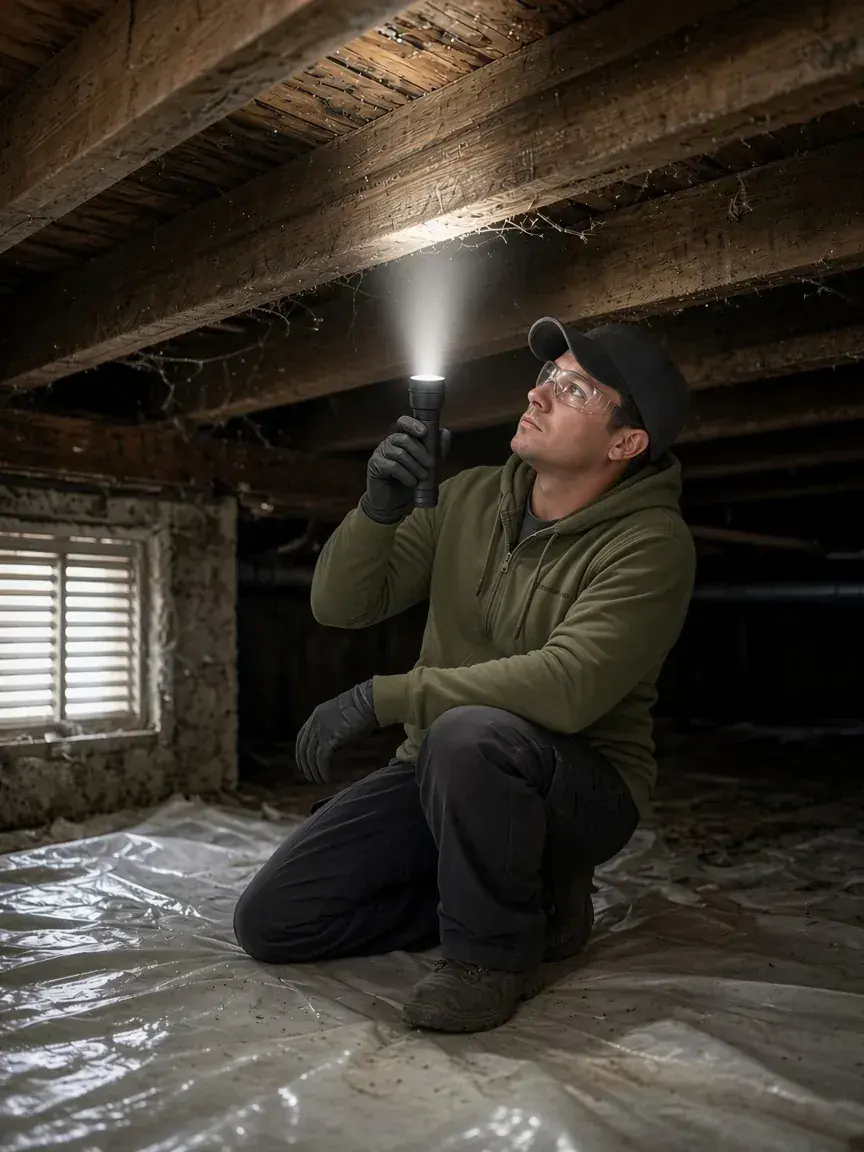
ProGuard technician checking crawlspace floor joists for signs of mice and spiders
Questions

What do people ask about millipede?

Do millipedes bite?
No. Some release a fluid that can irritate skin or eyes, so avoid handling them.
Why do millipedes come inside?
CSU Extension says they move into houses for brief periods in spring or fall, often tied to weather and moisture.
Will millipedes infest my house?
No. UC IPM notes they usually die quickly indoors because it is too dry.
How many legs does a millipede have?
Two pairs per segment on most segments. Even the largest have fewer than 100 legs.
Does ProGuard treat millipedes?
Yes. Millipedes are covered pests on our residential plans. Call or text us for a free quote.
Keep reading

Related guides

Centipede

Quick, many legged hunters, including the house centipede.

Centipede guide

Pill bug

Roly polys and sowbugs: tiny crustaceans from damp soil.

Pill bug facts for Idaho

Earwig

Pincered night feeders from damp mulch and flower beds.

Earwig guide

Residential pest control

See what the service includes and how it works.

Residential pest control details

Also in this section: Elm seed bug, Western conifer seed bug, Brown marmorated stink bug. Local pages: Emmett and Caldwell.

Back to all identify your other insects.

Sources

  1. UC Statewide IPM Program: Centipedes and millipedes
  2. Colorado State University Extension: Millipedes, centipedes and sowbugs

Written by the ProGuard team from the sources above. Last updated: November 17, 2026. This page is general information, not medical advice. If you are worried about a bite or your health, talk to a doctor.

Ready to keep pests out of your home?

Call, text or send a few details. We’ll give you a free quote before any work starts, and there are no contracts.