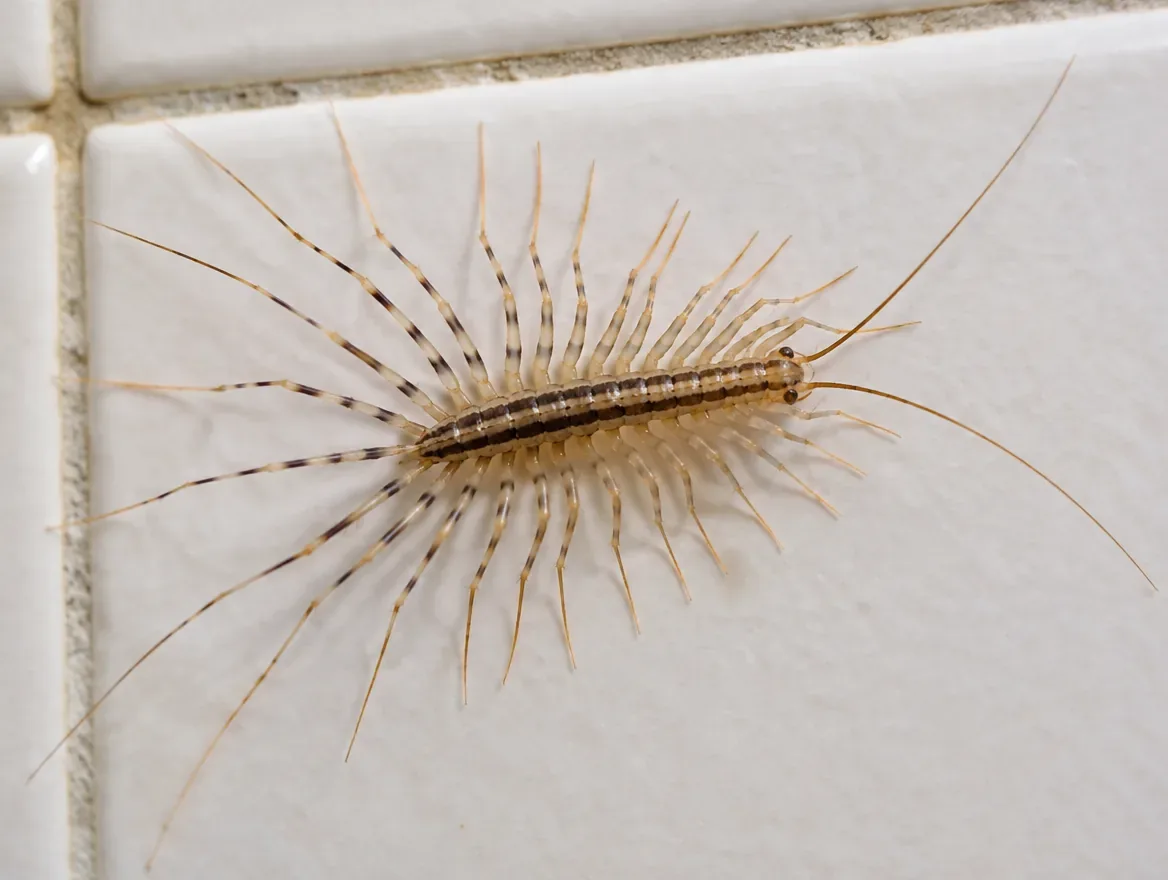
In short: centipedes are quick, flat, many legged hunters with one pair of legs per body segment. The house centipede, with its very long legs, is the one most often seen indoors. UC IPM says house centipedes are actually beneficial because they eat flies and other small household pests. Reducing moisture and sealing gaps keeps most outside.
UC IPM describes centipedes as elongated, flattened animals with one pair of legs on each body segment. Most species found in gardens are brown or reddish and have fairly short legs. They move quickly and have long antennae.
The house centipede looks different and alarms people. It has a short body and very long legs that make it look bigger than it is, plus very long antennae. UC IPM notes those long legs let it run rapidly across walls and floors.
Rounder, slower and brownish, with two pairs of legs per segment. They curl up when touched.
Shiny and silver with six legs and three tails.
Short, gray and armored, and they roll into a ball.
UC IPM says adult centipedes spend the winter in secluded, moist places. Outdoors they live under rocks, landscape timbers, mulch and leaf litter. Indoors they turn up in damp basements, crawlspaces, bathrooms and closets, where they hunt at night for insects and spiders.
Seeing more centipedes often means there is a lot for them to eat, so a centipede problem is often a sign of other pests and too much moisture.
Mostly no. UC IPM notes that when provoked, some large centipedes can give a painful bite that may cause local swelling, discoloration and numbness. House centipedes rarely bite. If a bite swells badly or gets worse, call a doctor, and call 911 for trouble breathing.
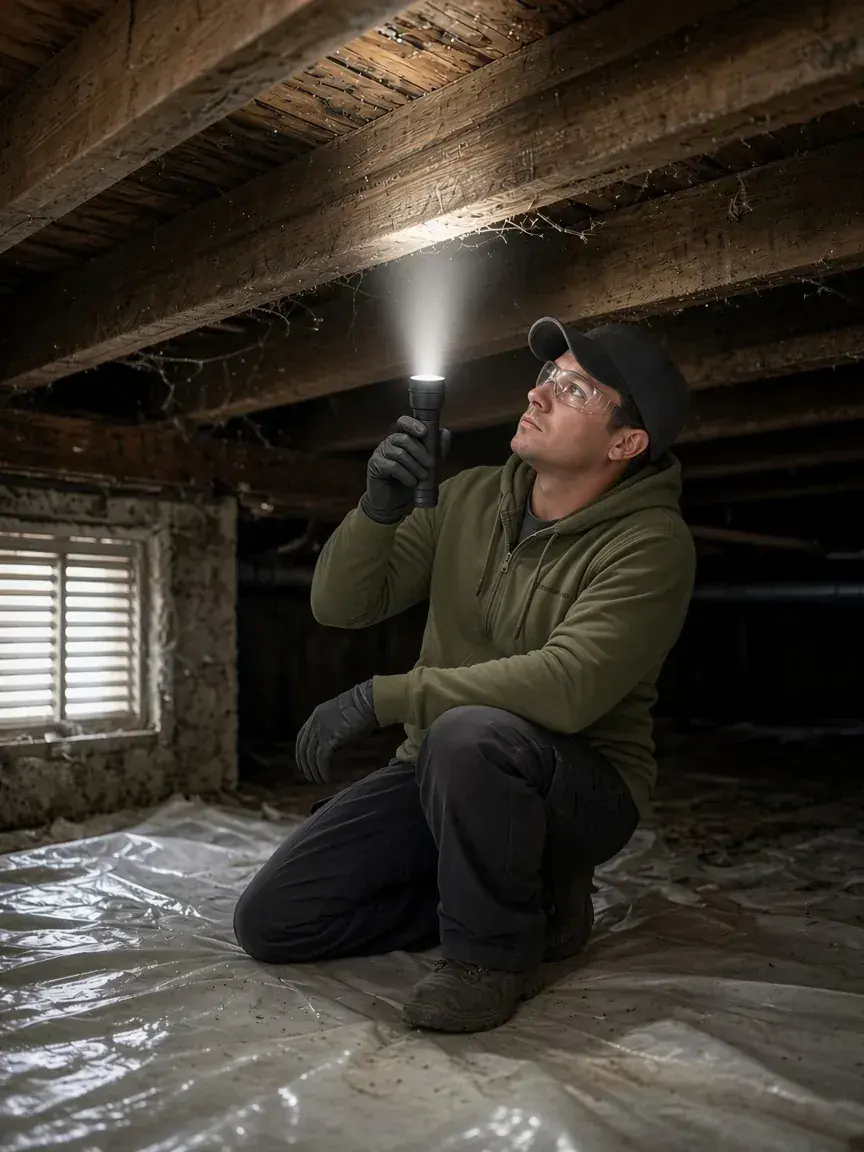
We treat the foundation, crawlspace and entry points where centipedes and the pests they eat come in, and point out moisture fixes. Centipedes are covered pests on our residential plans.
Quarterly visits keep the protection up, and quarterly plan customers get a free return visit if covered pests come back between visits. There are no contracts. We work family and pet safe. Treated areas are safe for kids and pets once they’re dry, which is usually about 15 to 20 minutes.
Learn more on our what residential pest control includes page, or ask for a free quote online.

See what the service includes and how it works.
Residential pest control in the Treasure ValleyAlso in this section: Elm seed bug, Western conifer seed bug, Brown marmorated stink bug. Local pages: Emmett and Caldwell.
Back to all identify your other insects.
Written by the ProGuard team from the sources above. Last updated: November 17, 2026. This page is general information, not medical advice. If you are worried about a bite or your health, talk to a doctor.
Call, text or send a few details. We’ll give you a free quote before any work starts, and there are no contracts.