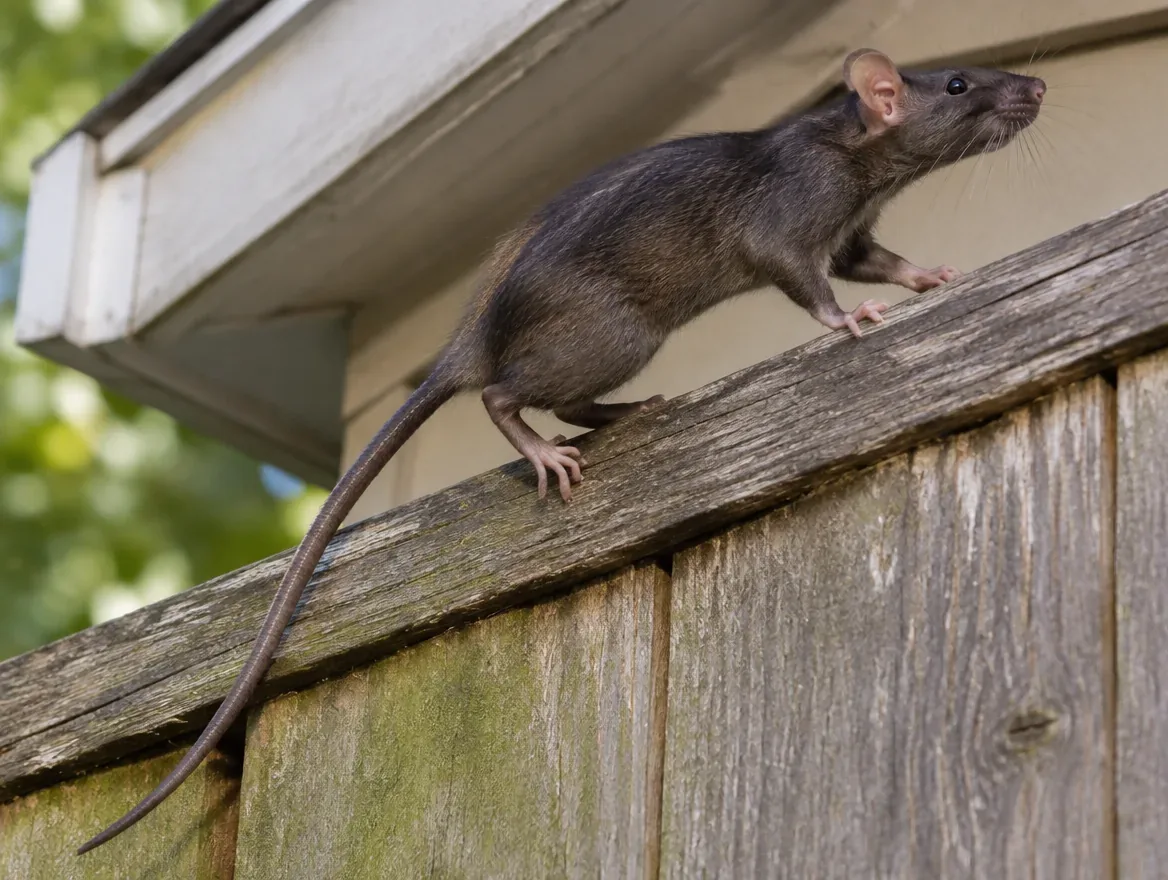
In short: roof rats are sleek, agile climbers that travel along fences, tree limbs and utility lines and nest above ground in attics, walls and trees. Idaho health officials list them as one of the two common rats in the state. Trim branches, cover vents and set traps up high where they travel.
Roof rats are slimmer than Norway rats, with a pointed muzzle, large ears and a tail that is longer than the head and body together. They weigh about 5 to 10 ounces and are excellent climbers.
Look for droppings and rub marks along rafters, pipes, fence tops and tree branches, gnawed fruit left in trees, and noise in the attic or in walls at dusk and after dark.
Stocky with a blunt muzzle and a shorter tail. They burrow along foundations and favor basements and ground floors.
Active in daytime and bushy tailed, while rats are active at night.
Much smaller, with smaller droppings.
The Idaho Department of Health and Welfare lists the roof rat as one of the two common rats in Idaho and notes roof rats enter homes by way of trees and utility lines. Central District Health reports rats in Eagle, Garden City and Boise, and the City of Boise says rat activity has been increasing across the Treasure Valley.
Roof rats nest above ground in dense shrubs, trees and ivy, and indoors in attics, walls and ceiling voids. They travel along utility lines and fence tops at dusk, and can range 300 feet or more for food. Fruit trees, seed feeders, pet food and trash draw them in.
Roof rats contaminate food and attics with droppings and urine and can spread diseases such as typhus, leptospirosis and rat bite fever. They chew wiring, which UC IPM says can cause electrical sparks and fires. Rats do not carry rabies, and Idaho health officials say Norway and roof rats do not carry hantaviruses.
Roof rats need a different approach than ground dwelling rats, so we look up: roof lines, vents, utility entries, branches and fence tops. We set traps where the rats travel and seal the openings they use. Traps and sealing materials are billed separately, and rodent service is included with our quarterly plans.
Rodent service is included with our quarterly plans, and traps and sealing materials are billed separately. Quarterly plan customers get a free return visit if rodents come back between visits, and there are no contracts. We work family and pet safe. Treated areas are safe for kids and pets once they’re dry, which is usually about 15 to 20 minutes.
Learn more on our how our rodent control works page, or reach out through our contact page.

Burrowing rats along foundations in Eagle, Garden City and Boise.
Norway rat facts for IdahoLocal pages: Eagle and Middleton.
Back to all rats in Idaho. Related in this section: Pack Rats.
Written by the ProGuard team from the sources above. Last updated: November 17, 2026. This page is general information, not medical advice. If you are worried about a bite or your health, talk to a doctor.
Call, text or send a few details. We’ll give you a free quote before any work starts, and there are no contracts.