Local, family and veteran owned · Eagle, IDMon to Sat, 9 AM to 6 PM.
In short: The false black widow is a dark cobweb spider that lives in garages, sheds and undisturbed corners and is often mistaken for a western black widow. It does not have a true red hourglass. It can bite if pressed against skin, but it is not the medically important spider in Idaho.
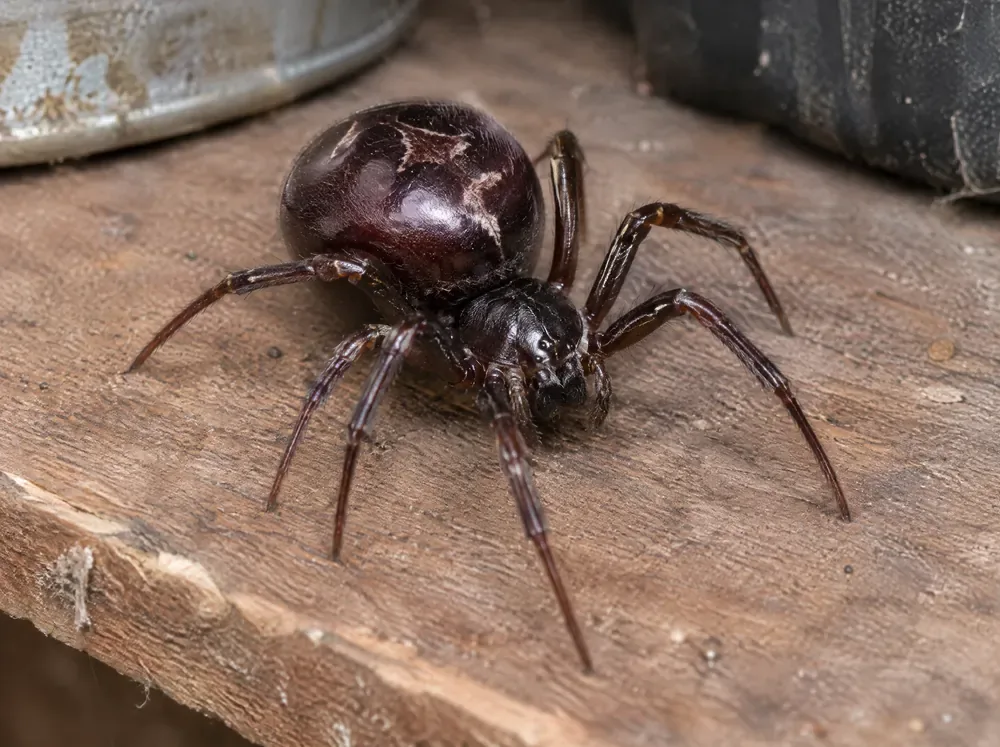
False black widows are cobweb spiders in the genus Steatoda. The species people usually mean is Steatoda grossa, a shiny, bulbous, dark brown to almost black spider. Some adults have a light band around the front of the abdomen or a pale, smudged mark underneath. That mark is not the crisp red hourglass of a western black widow.
The web is a messy, sticky tangle in a sheltered corner — the same kind of place a black widow would use, which is why the two get confused. False black widows are often a bit smaller and more brown than a mature female western black widow, but color is a poor test on its own. If you can see the underside and there is no clear red hourglass, it is not a western black widow. A close cousin, the triangulate cobweb spider (Steatoda triangulosa), has a patterned abdomen and is also common in homes.
The one Idaho spider of medical importance. Mature females are glossy black with a distinct red hourglass on the underside. When in doubt, treat it with caution and compare the two guides.
Long, thin legs and a small body in loose, messy webs. They do not have a bulbous black abdomen.
Several small cobweb spiders share garages and sheds. Patterned species such as Steatoda triangulosa are easier to separate from a widow than a dark Steatoda grossa is.
False black widows turn up in the same quiet, dry, undisturbed spots around Treasure Valley homes that black widows like: garage corners, stored boxes, sheds, meter closets, window wells and the undersides of outdoor furniture or play equipment that is not moved often. They are present most of the year, with more adult sightings in warmer months.
In Eagle, Meridian and Boise they are a regular identification question because a dark spider in a messy web raises an obvious worry. The western black widow really does live in this part of Idaho, so the comparison is worth making carefully rather than guessing from a phone photo whenever someone needs a certain answer.
A false black widow can bite if it is pressed against skin. The bite can be painful or irritating, but this is not the spider Idaho sources treat as medically important. That is the western black widow. If you think someone was bitten by a widow, or if a bite is accompanied by serious symptoms, get medical help. This page is general information, not medical advice.
When dark cobweb spiders keep showing up in a garage or shed, we treat the sheltered corners, entry points and the exterior line as part of quarterly spider control. If the spider is a western black widow, the same kind of work targets the quiet, undisturbed spots those spiders use. Quarterly plan customers get a free return visit if covered pests come back between visits. There are no contracts. We work family and pet safe. Treated areas are safe for kids and pets once they’re dry, usually about 15 to 20 minutes.
If you have the spider in a sealed container, we can often help you compare it with a western black widow. For a laboratory identification, University of Idaho Extension is the right place. Learn more on our spider control page, or request a free quote.
More answers in our full list of answers.
Written by the ProGuard team from the sources above. Last updated: November 17, 2026. This page is general information, not medical advice. If you are worried about a sting, bite or your health, talk to a doctor.
Call, text or send a few details. We’ll give you a free quote before any work starts, and there are no contracts.
