Local, family and veteran owned ยท Eagle, IDMon to Sat, 9 AM to 6 PM.
Customer Portalemail usCall or text 208-352-2062

Cellar Spiders (Daddy Longlegs) in Idaho

In short: cellar spiders are the long legged spiders in the corners of basements, garages and sheds, often called daddy longlegs. They are harmless, and the webs are the real nuisance. Vacuum them out, cut down the insects that feed them, and seal the gaps that let spiders in.

Identify it

How do you identify a cellar spider?

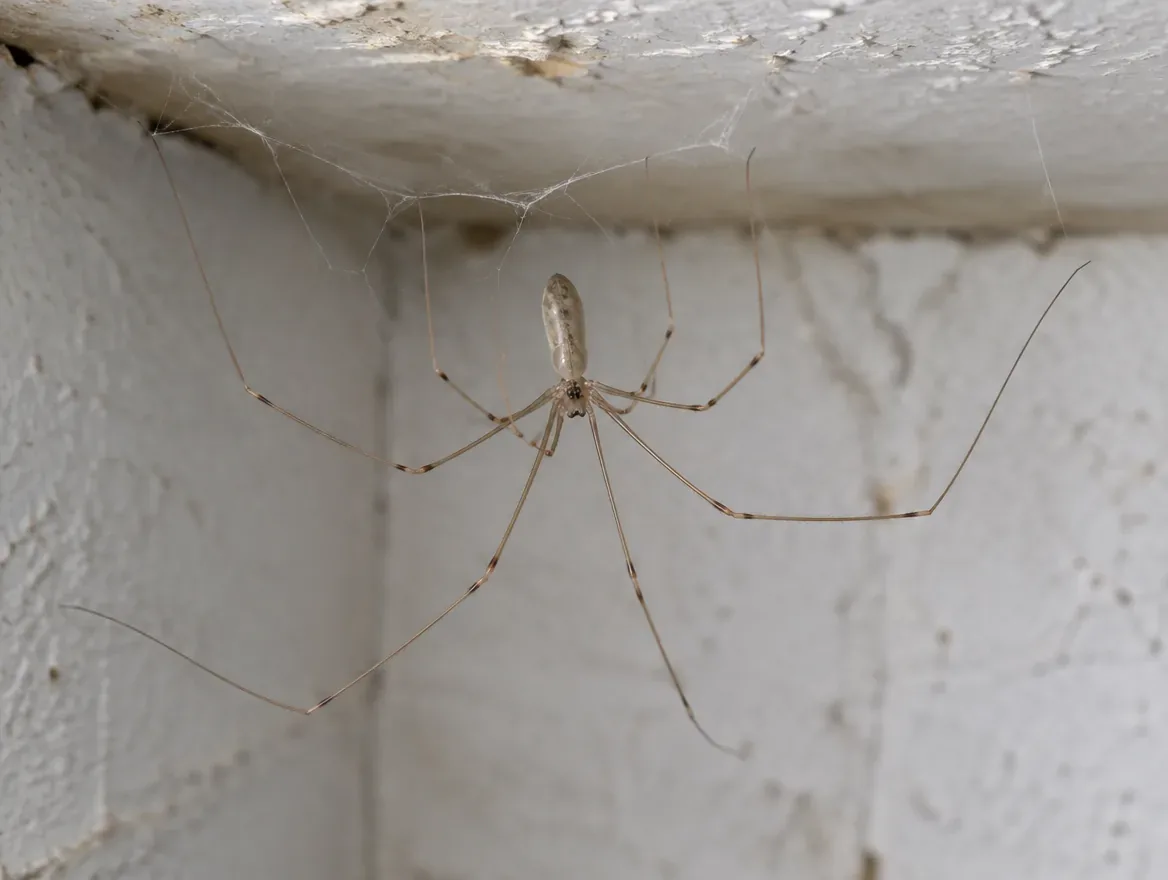
Cellar spiders have a small body, light brown color and very long, thin legs. Like all spiders they have two body regions joined by a thin waist. Harvestmen are also called daddy longlegs, but they are not spiders and have a single oval body.

The easiest clue is the way they act. When you disturb a cellar spider it vibrates back and forth on its web so quickly it turns into a blur. You often find two on the same web, a larger female and a smaller male. A female carries her round, pea sized egg sac in her jaws.

At a glance

Scientific name
Pholcus phalangioides (and relatives)
Look
Small body with extremely long, thin legs, light brown or gray
Web
Tangled and messy, added to over time, with dead prey trapped in it
Where
Dark, undisturbed corners of basements, garages and sheds, especially along ceilings
Behavior
Hang upside down and vibrate quickly in the web when disturbed
Egg sac
Round, pea sized, carried in the female’s jaws
Not the same as
Harvestmen, which are also called daddy longlegs but are not spiders
Danger
Not a concern for people
Look alikes

What else could it be?

Harvestmen

Often called daddy longlegs too, but they have one rounded body, spin no web and are not spiders.

Black widows

Round black bodies with a red hourglass and strong, sticky cobwebs. Cellar spiders have long thin legs and a small body.

Funnel web spiders

Heavier brown spiders with a flat web and a funnel shaped retreat.

Where and when

Where do cellar spiders live in Treasure Valley homes?

As the name suggests, cellar spiders live in basements and other dark, damp, undisturbed places inside buildings, especially in room corners and along the ceiling. They build tangled webs and hang in them upside down.

Unlike spiders that build a fresh web now and then, cellar spiders keep adding to the same one, so you end up with big cobwebs full of dead prey. Large numbers can build up in sheds and garages where lights are left on and doors stay open at night, because those conditions attract the insects they eat.

Signs to look for

  • Tangled, dusty webs in ceiling corners of basements, garages and sheds
  • Long legged spiders hanging upside down that blur when you touch the web
  • A pile of dead insects caught in the web
  • Lots of flying insects drawn to lights left on at night
Health and safety

Are cellar spiders dangerous?

No. Cellar spiders are not a concern for people. Their webs, not the spiders, are what make them a nuisance in homes. You may have heard that daddy longlegs are the most venomous spiders but cannot bite. University of Idaho Extension does not list them as a health concern, and we would not worry about them.

How ProGuard handles it

How does ProGuard handle cellar spiders?

Cellar spiders are a sign that insects are getting in and feeding a spider population. We remove webs we can reach and treat entry points, eaves and the corners where webs build up, so the cycle breaks and the webs stay gone longer.

Quarterly visits keep the protection up, and quarterly plan customers get a free return visit if covered pests come back between visits. There are no contracts. We work family and pet safe. Treated areas are safe for kids and pets once they’re dry, which is usually about 15 to 20 minutes.

Learn more on our spider control in the Treasure Valley page, or send us a few details online.
When to call a professional

  • Webs keep coming back in your garage, shed or basement
  • You have a lot of spiders in a space with lights on at night
  • You want the outside of the house sealed and treated
  • Webs are building up in hard to reach corners
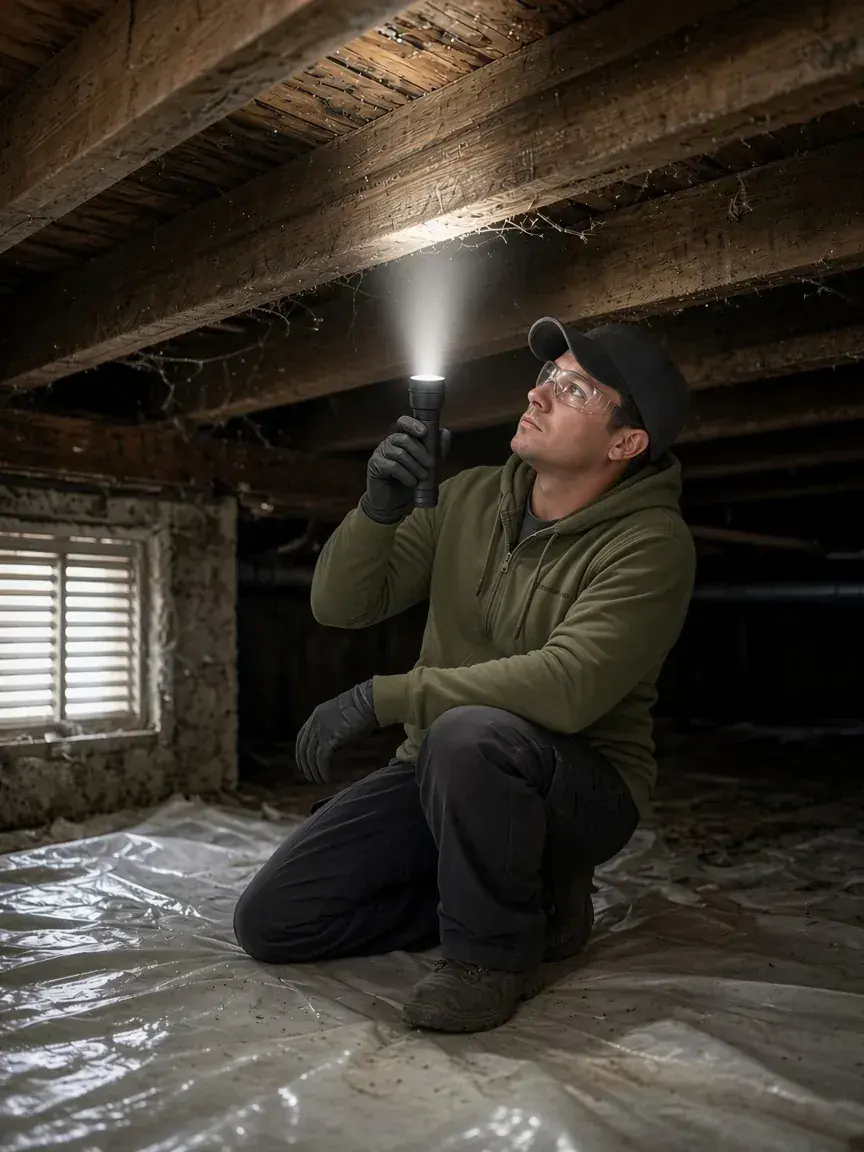
ProGuard technician checking crawlspace floor joists for signs of mice and spiders
Questions

What do people ask about cellar spider?

Are daddy longlegs the same as cellar spiders?
Often, yes. Cellar spiders with long, thin legs are called daddy longlegs in many places. Harvestmen are also called daddy longlegs, but they are not spiders.
Are cellar spiders dangerous?
No. They are not a concern for people. The webs are the main nuisance.
Why do I have so many cellar spiders in my garage?
Lights left on at night and open doors attract insects, and insects support large spider populations. Cutting down on both helps.
Will ProGuard clear cellar spiders and webs?
We remove reachable webs and treat the places spiders get in and gather as part of our regular residential plans. Ask for a free quote.
Keep reading

Related guides

Western black widow

The one medically important Idaho spider, and how to spot its hourglass.

Read about the Western black widow

Orb weaver

The big round webs under the eaves, and why they are harmless.

Orb weaver guide

Jumping spider

Curious, harmless and good for insect control.

Jumping spider facts for Idaho

Spider control

See what the service includes and how it works.

More about spider control

Also in this section: American house spider, Grass spider, False black widow. Local pages: Boise and Meridian.

Back to all spiders guides.

Sources

  1. University of Idaho Extension: Idaho’s Arachnids Around the Home and Field (BUL 1094, 2025)
  2. UC Statewide IPM Program: Spiders

Written by the ProGuard team from the sources above. Last updated: November 17, 2026. This page is general information, not medical advice. If you are worried about a bite or your health, talk to a doctor.

Ready to keep pests out of your home?

Call, text or send a few details. We’ll give you a free quote before any work starts, and there are no contracts.