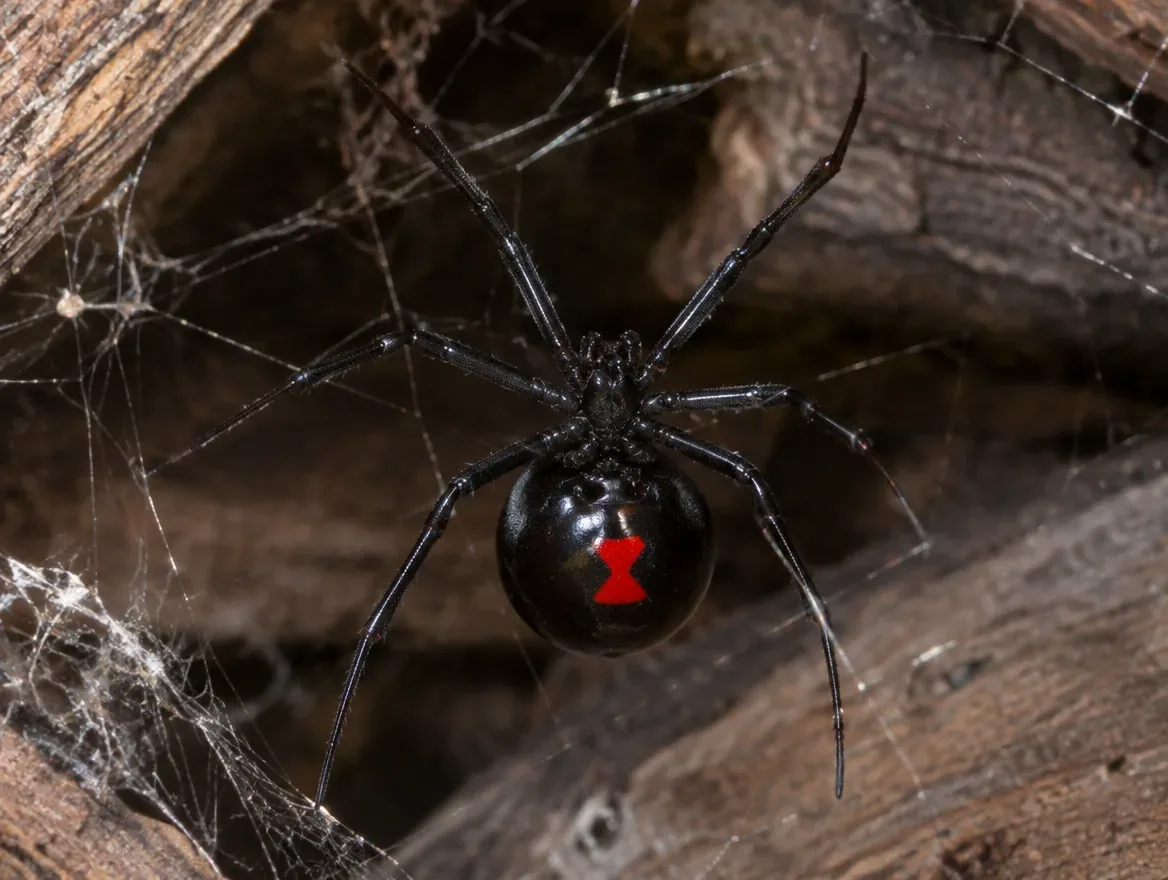
In short: the western black widow is the one Idaho spider that is medically important, and it is most common in the southern third of the state, which includes the Treasure Valley. Adult females are shiny black with a red hourglass underneath. They bite only when pressed or cornered, so shake out shoes and wear gloves in woodpiles and sheds.
Adult females are the ones most people picture: a round, shiny black abdomen and a red hourglass on the underside. You often cannot see the hourglass unless the spider is upside down in its web, which is where it spends most of its time. Adult males are much smaller, no more than half the size of a female, and are olive brown or black with light stripes and a band down the back. Young widows are pale with rows of red or white stripes or spots, so they look very different from the adult.
Size helps. Most adult black widows, legs included, are about the size of a nickel. Most other cobweb spiders are the size of a dime or smaller.
Tan to dark brown with wavy, angular lines on top of the abdomen. They build the same kind of web and have the same round body, but they never have the red hourglass. They are harmless predators.
Very long, thin legs and a small body. Their loose, tangled webs hang in corners and basements. They are harmless to people.
Most are the size of a dime or smaller and lack the hourglass. If you are unsure, bring a sealed, labeled specimen to a UI Extension office.
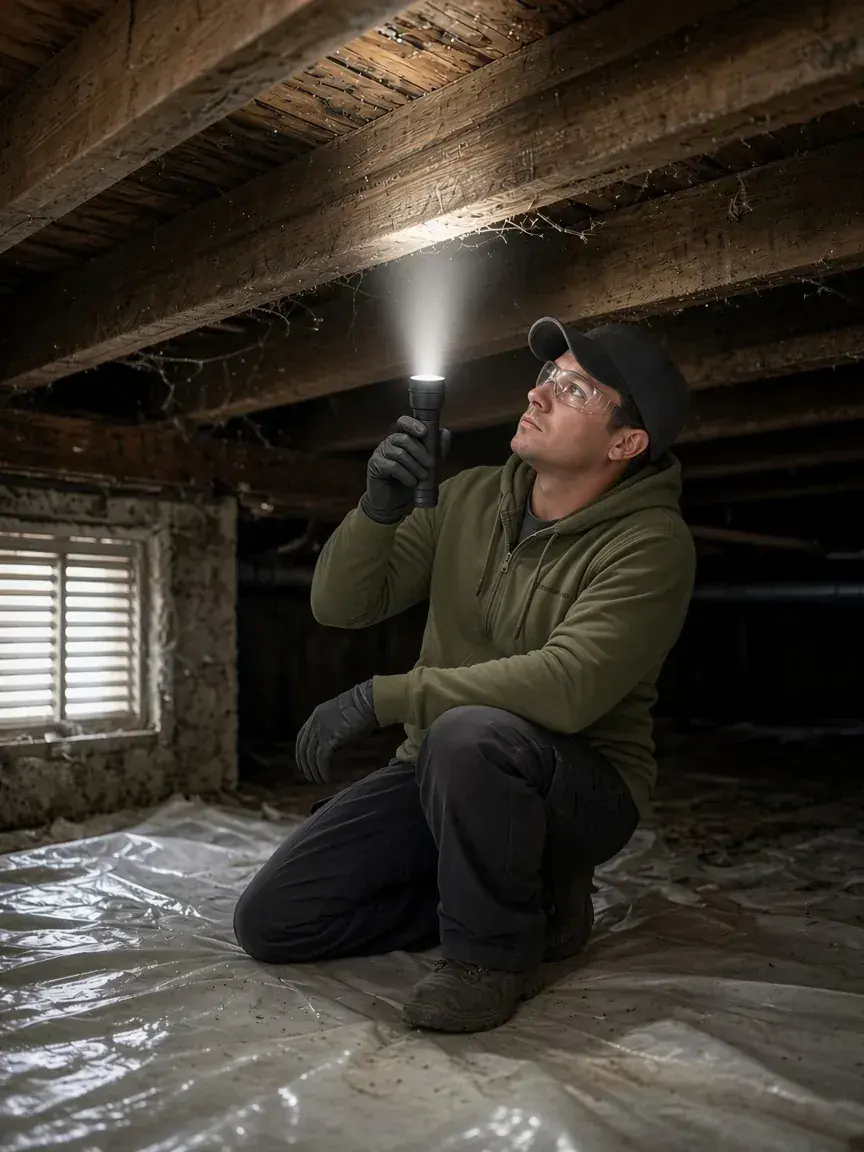
Widows spin three dimensional, irregular cobwebs in dry, protected, dark places, often close to the ground. Around homes that means garages, sheds and horse barns, under raised patio decks, in doghouses, in stacked wood and debris piles and in basement window wells. Inside, check corners of garages, crawl spaces and storage areas. They are not aggressive hunters: they hang upside down in the web and wait, mostly at night.
Black widows live statewide but are most common in the southern third of Idaho, and the Treasure Valley is part of that range. A female can produce up to twenty egg sacs in her one year lifetime, and young spiders mature in as little as two to eight months. A quiet corner that nobody cleans can fill up quickly.
The black widow is the only Idaho spider with venom that causes an immediate, serious reaction. Small children, older adults and people with other health problems are at the greatest risk. The Idaho Department of Health and Welfare has no record of a death from a spider bite in the state, and widows are calm and tentative. They bite when cornered or pressed against skin, for example when a hand goes into a glove or a foot into a shoe they are hiding in.
If you or someone in your family is bitten, stay calm, wash the area, and call your doctor or go to a hospital for care. If you can, save the spider in a sealed container so it can be identified. Call 911 for trouble breathing or severe symptoms.
Black widows are the one common spider where treatment is worth doing, so we look closely at the places they like: garage corners, sheds, window wells, under decks and along the foundation. We remove webs and egg sacs we can reach and treat where they hide and where they get in.
Quarterly visits keep the protection up, and quarterly plan customers get a free return visit if covered pests come back between visits. There are no contracts. We work family and pet safe. Treated areas are safe for kids and pets once they’re dry, which is usually about 15 to 20 minutes.
Learn more on our spider control in the Treasure Valley page, or send us a few details online.

The bite reputation has been debunked. What the spider really is.
Read about the hobo spiderAlso in this section: American house spider, Grass spider, False black widow. Local pages: Boise and Meridian.
Back to all spiders guides.
Written by the ProGuard team from the sources above. Last updated: November 17, 2026. This page is general information, not medical advice. If you are worried about a bite or your health, talk to a doctor.
Call, text or send a few details. We’ll give you a free quote before any work starts, and there are no contracts.