Local, family and veteran owned · Eagle, IDMon to Sat, 9 AM to 6 PM.
In short: mud daubers are thread waisted, dark solitary wasps that build hard nests of mud on siding, under eaves, in garages and sheds. UC IPM says they rarely sting. They stock their nests with spiders, including black widows, so they are more of a mess than a threat. Scrape off old nests and seal gaps where they build indoors.
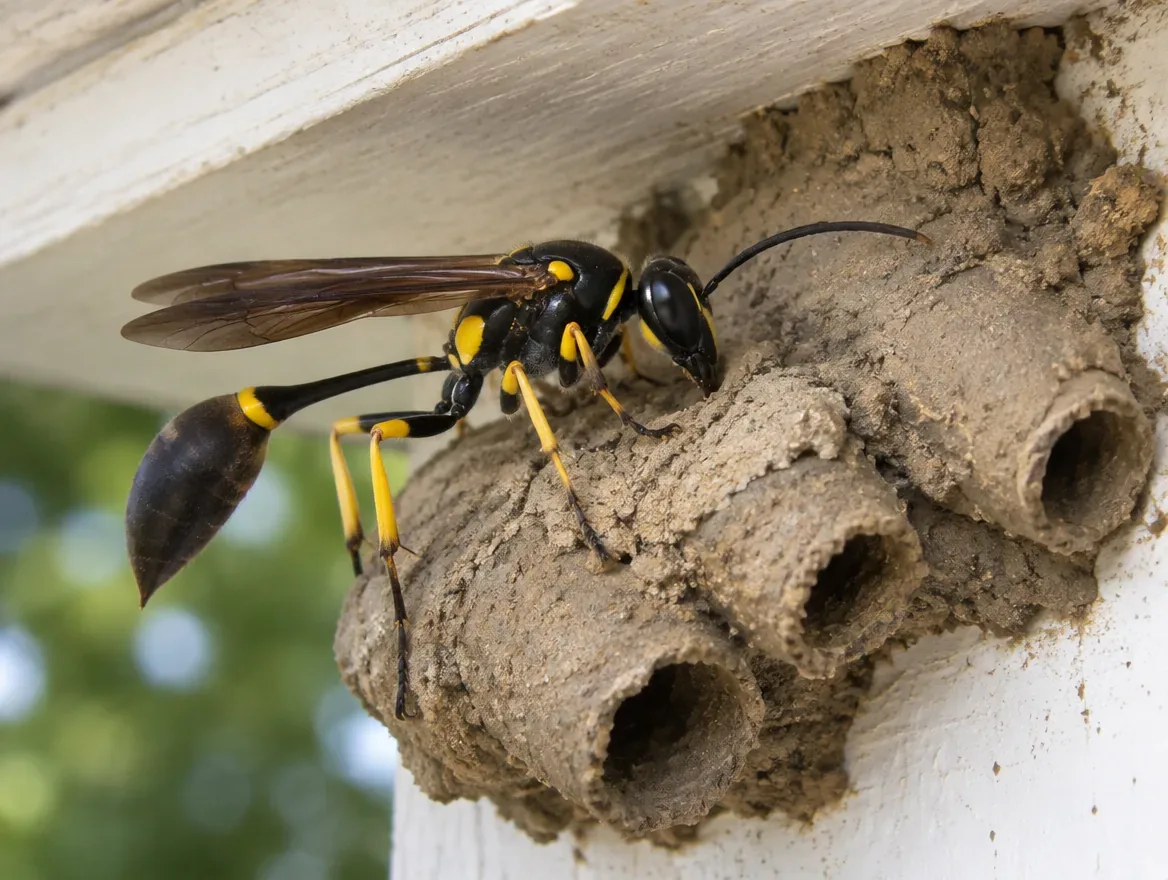
UC IPM describes mud daubers as dark colored and thread waisted, and that waist is the giveaway. The front of the body and the abdomen look connected by a long, thin stalk. Some are shiny black, some are metallic blue and some are black and yellow, which gets them confused with yellowjackets.
The nests are unmistakable. A female gathers wet mud from a puddle or sprinkler zone and shapes it into tubes or lumps on a protected surface. Each cell gets an egg and a supply of spiders. Later the young wasp chews a round hole and leaves, so old nests are full of small exit holes.
They build gray paper nests, not mud, and fly with long legs dangling.
Stockier, with a short waist, and they live in large colonies that defend the nest.
Small wasps that build tiny, round, jug shaped mud nests. Also gentle.
Mud daubers need two things: mud and a sheltered surface. In the valley’s dry summers, they gather mud at the edges of sprinkler zones, ditches and puddles, then build on the protected side of the house, under eaves and porch ceilings, inside open garages and sheds, and in attics and crawlspaces they can get into.
Because they hunt spiders to feed their young, mud daubers often show up wherever spiders are common. Each female works alone, so there is no colony to defend, and that is why they almost never sting.
Very rarely. UC IPM says mud daubers rarely sting. They do not defend their nests the way social wasps do, and most people only notice the mess. Nests can clog vents, equipment and outdoor grills, which is the bigger practical problem.
If someone is stung and has trouble breathing, or swelling of the face, lips or throat, call 911. For a sting that swells a lot or gets worse, call a doctor.
Mud daubers are mostly a cleanup job. When nests pile up on a house, we scrape and clear them, treat the spots where they keep building and cut down the spiders that draw them in. Wasp nest work is covered by our quarterly plan. Call or text us for a free quote.
Quarterly visits keep the protection up, and quarterly plan customers get a free return visit if covered pests come back between visits. There are no contracts. We work family and pet safe. Treated areas are safe for kids and pets once they’re dry, which is usually about 15 to 20 minutes.
Learn more on our what residential pest control includes page, or send us a few details online.
The aggressive late summer wasp at picnics, and its hidden nests.
Yellowjacket: signs and look alikesThe one medically important Idaho spider, and how to spot its hourglass.
Read about the Western black widowSee what the service includes and how it works.
Residential pest control in the Treasure ValleyAlso in this section: Ground-nesting yellowjacket, European paper wasp. Local pages: Garden City and Middleton.
Back to all browse wasps and hornets guides.
Written by the ProGuard team from the sources above. Last updated: November 17, 2026. This page is general information, not medical advice. If you are worried about a bite or your health, talk to a doctor.
Call, text or send a few details. We’ll give you a free quote before any work starts, and there are no contracts.
