Local, family and veteran owned · Eagle, IDMon to Sat, 9 AM to 6 PM.
In short: Cluster flies are slightly larger, slower, dark flies with short golden hairs on the thorax. In fall they gather on sunny walls and move into attics and wall voids to overwinter. On warm days they buzz at upstairs windows. They do not breed in household garbage the way house flies do. Their larvae develop as parasites of earthworms.
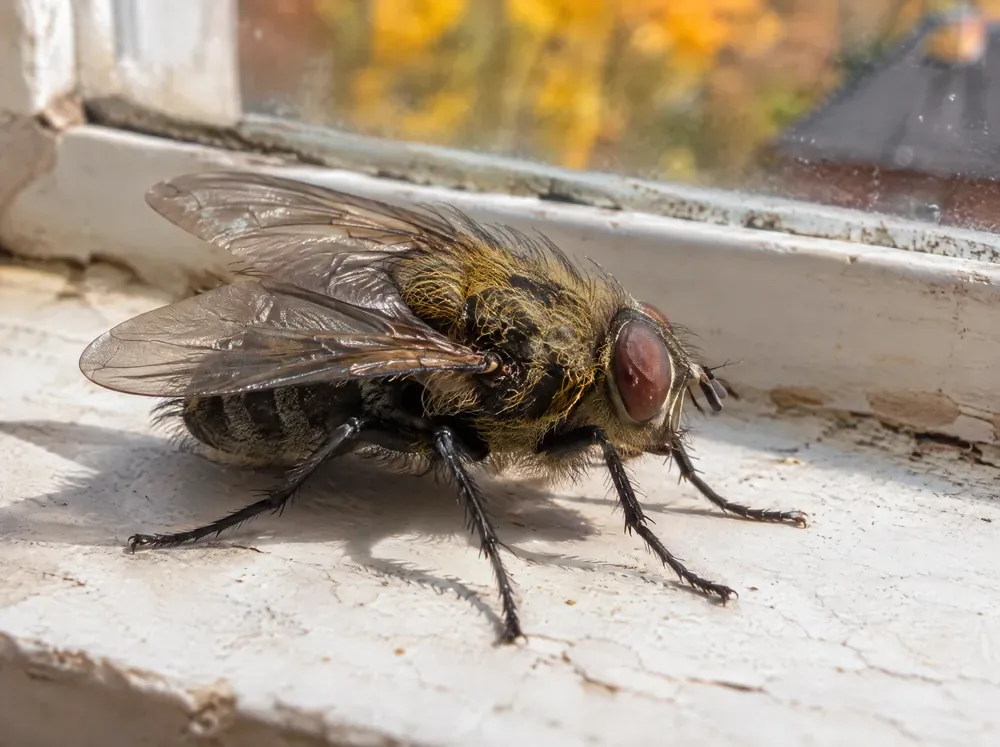
Cluster flies (Pollenia rudis and related Pollenia) look like a sluggish house fly at first glance, but they are a little larger, with a dull dark abdomen and a covering of short golden hairs on the thorax that you can see in good light. They crawl more than they dart, and they appear in groups at a window or in an attic corner, which is how they got the name.
House flies breed in garbage, manure and moist rotting material and are a warm-season kitchen and bin problem. Cluster flies are a fall-and-winter building problem. They do not mean the attic is full of rotting food.
Faster, more at home in kitchens and around trash in warm weather, and it breeds in garbage or manure. See that guide.
Often metallic green or blue; usually tied to a carcass or decaying material.
Elm seed bugs, seed bugs and stink bugs can appear at the same sunny walls; they are not flies.
In the Treasure Valley, cluster flies show up on sun-facing walls in fall — often the south or west side of a two-story house or a home with a usable attic — in Eagle, Meridian and Boise. They slip into soffits, attic vents and wall voids. On a warm January afternoon they suddenly appear, buzzing at an upstairs window, then settle again when the temperature drops.
Yards with earthworms (irrigated turf) can support the outdoor life cycle. The indoor problem is the overwintering adults, not a breeding site in the house.
We treat cluster flies as a seasonal exterior and attic-edge problem: the sunny walls, soffits and vents they use in fall, included in quarterly service. Flies already in a void can still appear on a warm day. Quarterly plan customers get a free return visit if covered pests come back between visits. There are no contracts. We work family and pet safe. Treated areas are safe for kids and pets once they’re dry, usually about 15 to 20 minutes.
If the flies are actually house flies, the source is usually garbage or another moist breeding site; see that guide. Request a free quote, or call or text 208-352-2062.
More answers in our answers to common questions.
Written by the ProGuard team from the sources above. Last updated: November 17, 2026.
Related in this section: Gnats.
Call, text or send a few details. We’ll give you a free quote before any work starts, and there are no contracts.
