Local, family and veteran owned · Eagle, IDMon to Sat, 9 AM to 6 PM.
In short: most gnats in the house are one of three small flies. Fungus gnats breed in damp houseplant soil, drain flies breed in the slime inside drains, and fruit flies breed in ripe produce. UC IPM says fungus gnat adults are usually about 1/16 to 1/8 inch long.
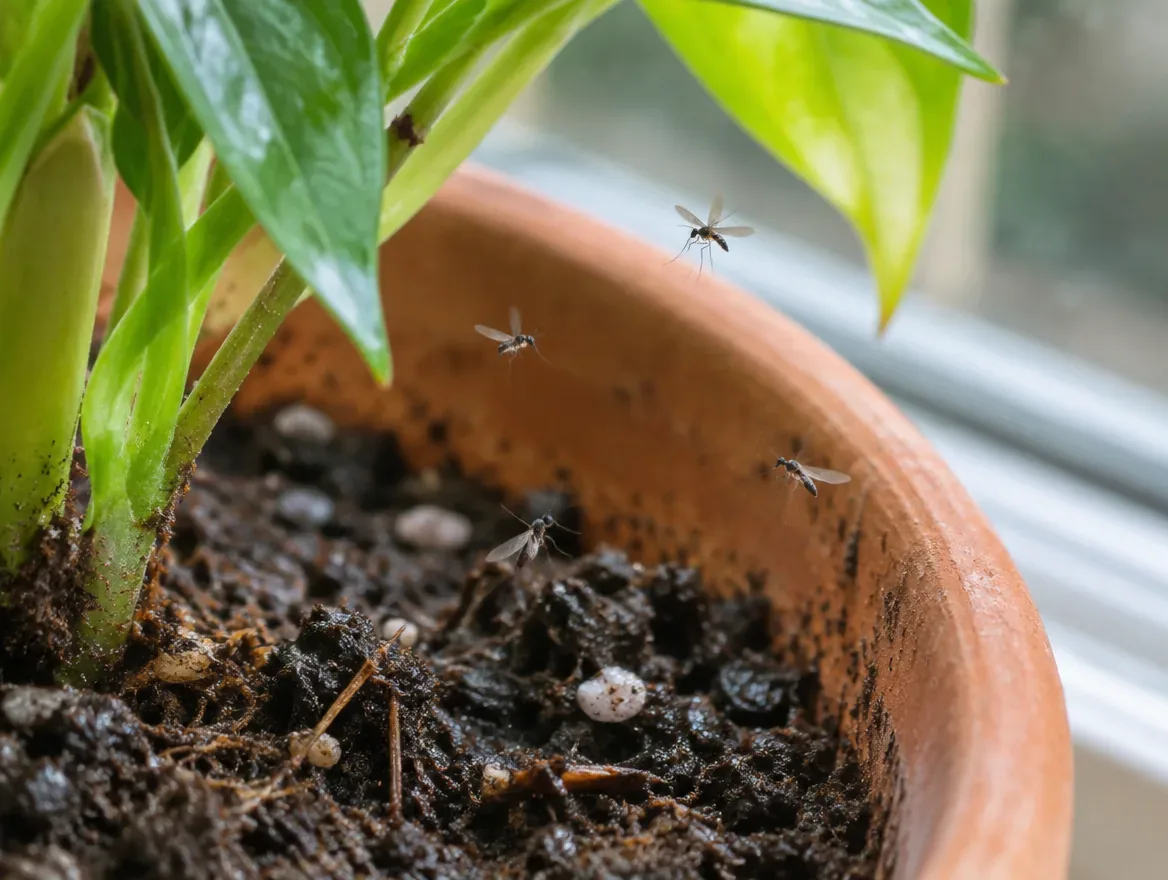
Where you see them is the best clue. Fungus gnats are small, dark, delicate flies with long legs and long antennae that walk on houseplant soil and gather at windows. UC IPM says most are about 1/16 to 1/8 inch long, and their larvae leave shiny trails on the soil surface.
Drain flies, also called moth flies, look like tiny fuzzy moths with wings held like a roof. They rest on bathroom and kitchen walls near drains and hop up when disturbed. Fruit flies are tan with bright red eyes and hover around fruit bowls, trash and recycling bins.
Longer legs and a long beak, and they bite. Mosquito control is a separate service.
Larger two toned moths that come from pantry food, not plants or drains.
Bigger, gray flies that circle slowly in the middle of rooms.
UC IPM says fungus gnats thrive in moist conditions, and females lay eggs in damp potting soil or decaying plant matter. Overwatered houseplants, especially in winter when they dry slowly, are the usual source. The larvae eat fungi and plant matter in the soil and sometimes chew roots.
Drain flies breed in the gelatin like film that builds up inside sink, shower and floor drains, and UC IPM notes the fix is to clean that film out of the drain. Fruit flies breed in overripe fruit, juice spills and the bottom of recycling bins.
No. Fungus gnats, drain flies and fruit flies do not bite people. Fungus gnat larvae can damage roots of seedlings and houseplants when numbers are high, but UC IPM notes that overwatering, root rot and poor drainage are much more common causes of wilting.
Most gnat problems clear up once the breeding source is found and fixed. If you cannot find it, we help track it down and treat where it makes sense.
Fly and gnat service is quoted on its own, and we give you a free quote before any work starts. We work family and pet safe. Treated areas are safe for kids and pets once they’re dry, which is usually about 15 to 20 minutes.
Learn more on our residential pest control in the Treasure Valley page, or reach out through our contact page.
Two-toned moths that come from pantry food, not plants or drains.
Indian meal moth: signs and look alikesSee what the service includes and how it works.
More about residential pest controlAlso in this section: Cluster fly. Local pages: Middleton and Emmett.
Back to all flies in Idaho.
Written by the ProGuard team from the sources above. Last updated: November 17, 2026. This page is general information, not medical advice. If you are worried about a bite or your health, talk to a doctor.
Call, text or send a few details. We’ll give you a free quote before any work starts, and there are no contracts.
