Local, family and veteran owned · Eagle, IDMon to Sat, 9 AM to 6 PM.
In short: the odorous house ant is the most common ant in Idaho homes. Workers are tiny, brown to black, and smell like rotten coconut when crushed. They follow trails to sweets and are among the hardest ants to discourage, so cleaning up food and sealing entry points matters as much as treatment.
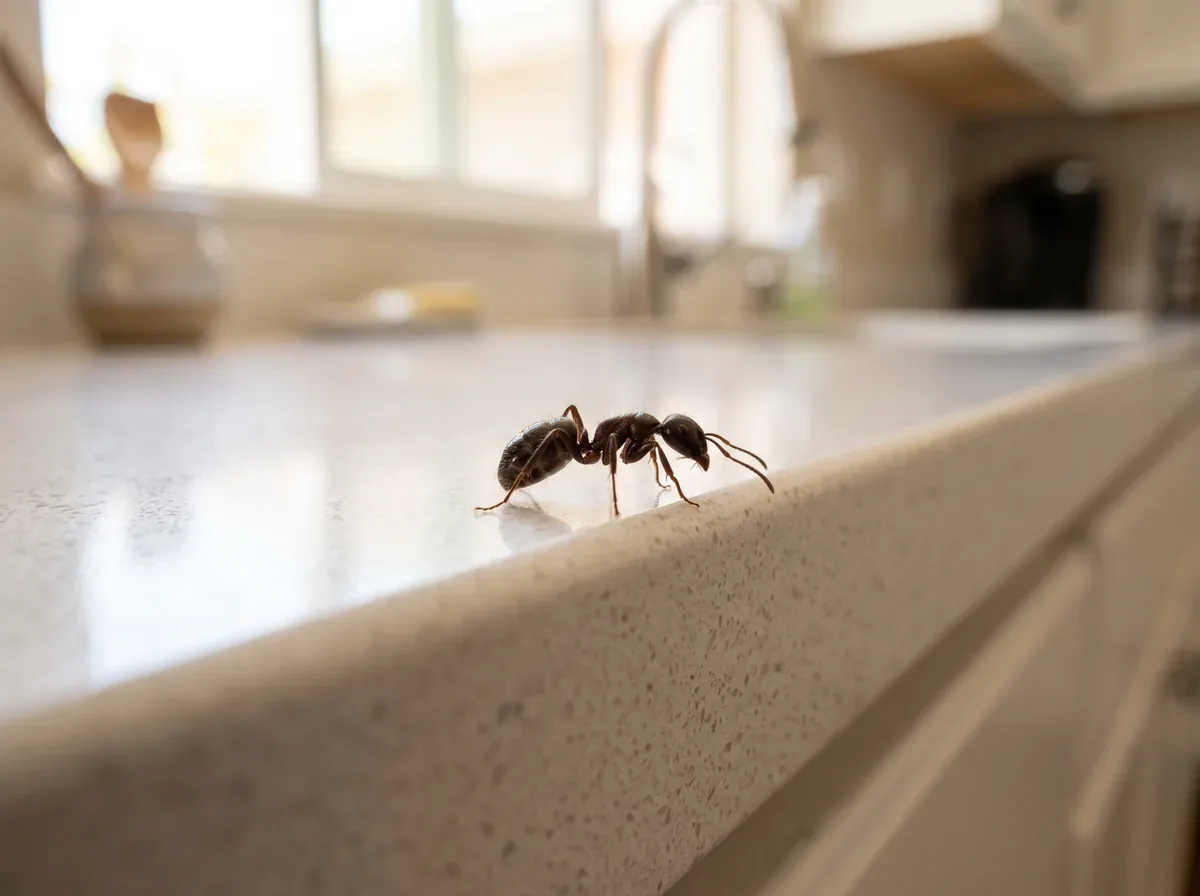
Workers are extremely small, about 1/16 inch long, and one uniform brown to black. They have one waist segment, or node, that is hidden by the abdomen when seen from above. The easiest test is the smell: crush one and you will notice a rotten coconut odor.
They travel in steady, visible trails along edges, pipes and counters. WSU notes that trails are easiest to see after noon, and that you can use a flashlight to trace them from the nest to your home.
Two nodes instead of one, with fine grooves on the head and thorax. They leave small piles of sand and soil.
Look for the hidden single node and the coconut smell when crushed.
University of Idaho Extension lists the odorous house ant as the most common ant in Idaho homes. Outdoors, colonies nest in shallow, shapeless soil nests that move often, under rocks, bark and debris. Indoors, they sometimes nest in wall voids near heat and moisture.
Winged swarmers can appear throughout the year but are most common in June and July. Trails to sweet spills, pet food and fruit are the usual sign inside.
They do not sting and are not a health danger. They are a contamination and nuisance problem in kitchens and pantries because workers walk through food and trash and then walk across your counters.
Odorous house ants are among the hardest ants to discourage. We find the trails and entry points and treat the nests we can reach and the places where the foundation meets the soil.
Quarterly visits keep the protection up, and quarterly plan customers get a free return visit if covered pests come back between visits. There are no contracts. We work family and pet safe. Treated areas are safe for kids and pets once they’re dry, which is usually about 15 to 20 minutes.
Learn more on our ant control in the Treasure Valley page, or ask for a free quote online.
Big red seed gatherers with a bare patch and a painful sting.
Harvester ant: signs and look alikesAlso in this section: Thatching ant, Field ant, Pharaoh ant. Local pages: Meridian and Nampa.
Back to all ants in Idaho.
Written by the ProGuard team from the sources above. Last updated: November 17, 2026. This page is general information, not medical advice. If you are worried about a bite or your health, talk to a doctor.
Call, text or send a few details. We’ll give you a free quote before any work starts, and there are no contracts.
