Local, family and veteran owned · Eagle, IDMon to Sat, 9 AM to 6 PM.
In short: pavement ants are the second most common ant in Idaho homes. They are small, light to dark brown, and nest under patios, slabs and stones, leaving little piles of sand. They have a stinger but are rarely aggressive. Cleaning up food, sealing cracks and treating the nest are what work.
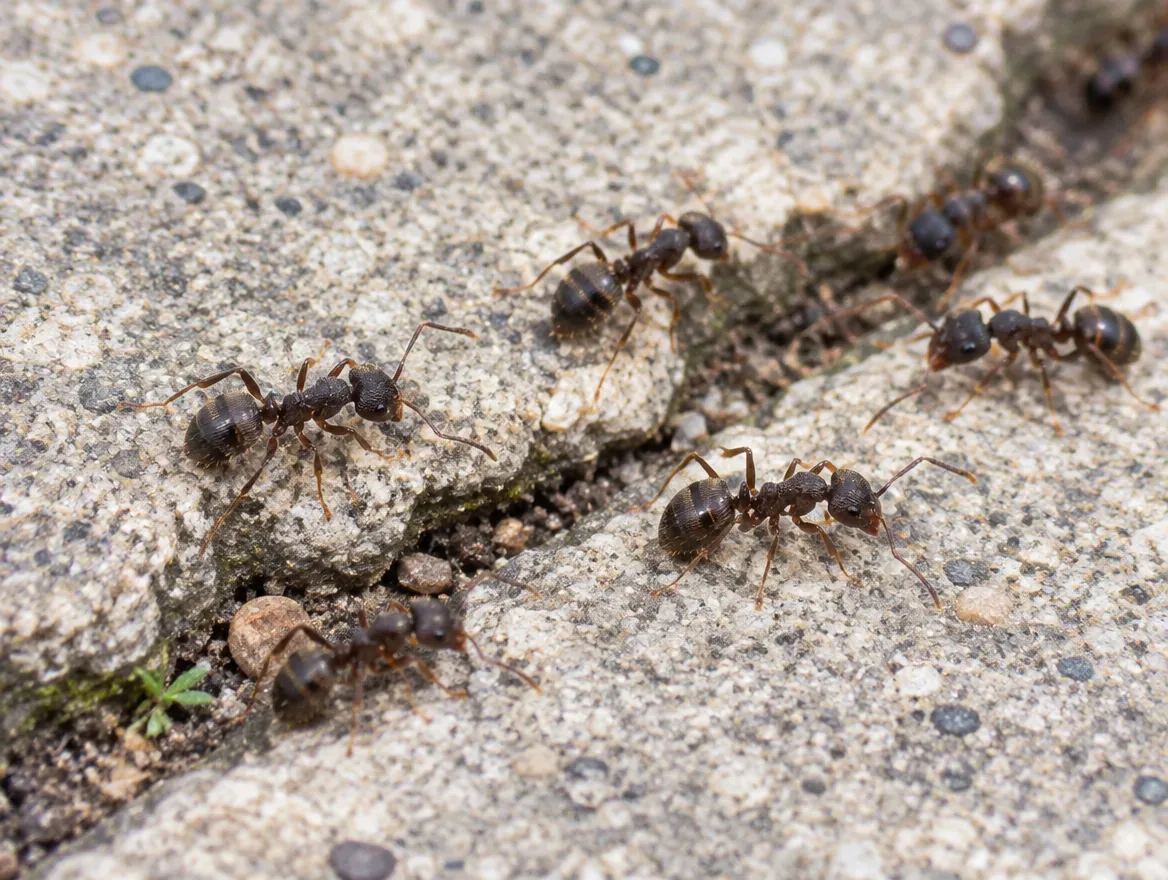
Pavement ants are small, about 1/8 inch or a little less, with colors from light brown to dark brown or black and paler legs. Under magnification they have two waist segments and fine parallel grooves on the head and thorax. Colonies often have many queens.
You will often notice the nest before the ants: small piles of sand pushed up through cracks along patios, driveways, sidewalks and sometimes basement floors.
One hidden waist node, no grooves, and a rotten coconut smell when crushed.
Count the waist nodes and look for the grooves on the head and body.
University of Idaho Extension ranks the pavement ant next after the odorous house ant as a common house invader. Outdoors, nests are in exposed soil under stones or pavement, in rotting wood, and under slabs. Ants then trail inside through cracks to look for food.
Reproductive swarms can happen any time but are most common in June and July. Pavement ants can be hard to manage because they nest wherever they like in common soils.
Pavement ants have a stinger but are rarely aggressive toward people, and any skin reaction is typically mild. They feed on a wide range of foods, including grease and meat, so they can contaminate kitchens and pantries. They can also act as an intermediate host for a poultry tapeworm, which is mostly a concern if you keep chickens.
If the nest can be found, treating it directly is effective, and that is where we start. We also treat the foundation line and cracks the ants use and recommend sealing, so the colony under your patio does not keep sending scouts inside.
Quarterly visits keep the protection up, and quarterly plan customers get a free return visit if covered pests come back between visits. There are no contracts. We work family and pet safe. Treated areas are safe for kids and pets once they’re dry, which is usually about 15 to 20 minutes.
Learn more on our our ant control service page, or reach out through our contact page.
The most common ant in Idaho homes, and the rotten coconut smell.
Odorous house ant guideBig red seed gatherers with a bare patch and a painful sting.
Harvester ant facts for IdahoAlso in this section: Thatching ant, Field ant, Pharaoh ant. Local pages: Meridian and Nampa.
Back to all ants in Idaho.
Written by the ProGuard team from the sources above. Last updated: November 17, 2026. This page is general information, not medical advice. If you are worried about a bite or your health, talk to a doctor.
Call, text or send a few details. We’ll give you a free quote before any work starts, and there are no contracts.
