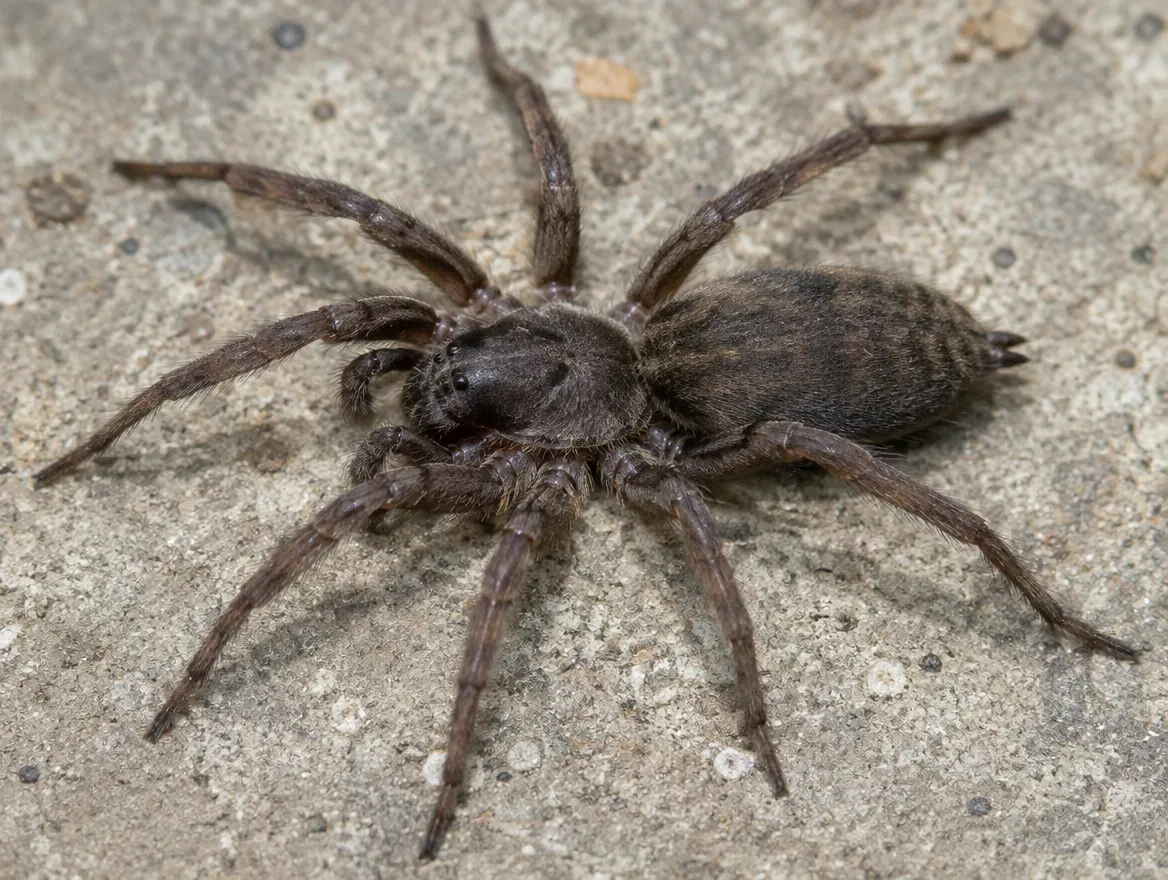
In short: ground spiders are plain, dark hunting spiders that run along the ground at night instead of spinning a web. They are one of the groups that wander into Idaho homes as the weather cools, and they are considered harmless and useful. You can scoop one outside, and sealing door gaps keeps most of them out.
Ground spiders are not flashy. Most are dark brown, gray or black with a few lighter marks on the abdomen, and they are fairly small. The best clue is a close look at the back end. Two spinnerets, the silk spouts, stick out like a pair of short tailpipes and are easy to see on a ground spider.
The way they move tells you a lot, too. You usually spot one running across the floor or the ground in the dark, then stopping. They do not hang in a web. Ground spiders chase their prey and rest in a small silk pocket under a rock, loose bark or a pile of leaves.
Bigger and hairier, with large eyes set in a distinct pattern. Wolf spiders also run along the ground but look robust, not plain.
Funnel weavers that build a flat web with a tube at the back. A ground spider has no web at all.
Pale yellow to beige and nocturnal, which sets them apart from the darker ground spiders.
Utah State University Extension says ground spiders live in leaf litter, grass, landscape plantings and around buildings, where they hunt insects and other spiders. Idaho Fish and Game’s species catalog lists ground spiders such as the victorious ground hunter, Haplodrassus eunis, as present, native and regularly occurring in Idaho.
They tend to come in when it cools off. Colorado State University Extension notes that ground spiders can enter homes as temperatures drop, and USU suggests watching for them most between August and October. Indoors you will usually see one on a floor, near a door or in a garage or basement.
USU Extension lists them as a nuisance indoors that is not known to be a health hazard, and as beneficial because they eat other insects and spiders. Colorado State University Extension calls them completely harmless to people. As with any spider, a bite is possible if one is pressed against your skin, but it is not common.
If a bite swells, spreads or gets worse over a few days, see a doctor. Many skin problems get blamed on spiders when they are something else.
Ground spiders arrive on their own schedule, mostly when the weather turns cooler. We treat the outside of the house, door and window frames and the foundation line where they travel and hide, and we recommend sealing the gaps they use to get in.
Quarterly visits keep the protection up, and quarterly plan customers get a free return visit if covered pests come back between visits. There are no contracts. We work family and pet safe. Treated areas are safe for kids and pets once they’re dry, which is usually about 15 to 20 minutes.
Learn more on our how our spider control works page, or ask for a free quote online.

The bite reputation has been debunked. What the spider really is.
Hobo spider: signs and look alikesSmall, pale night hunters and the truth about their bite.
Read about the yellow sac spiderAlso in this section: American house spider, Grass spider, False black widow. Local pages: Boise and Meridian.
Back to all browse spiders guides.
Written by the ProGuard team from the sources above. Last updated: November 17, 2026. This page is general information, not medical advice. If you are worried about a bite or your health, talk to a doctor.
Call, text or send a few details. We’ll give you a free quote before any work starts, and there are no contracts.