Local, family and veteran owned ยท Eagle, IDMon to Sat, 9 AM to 6 PM.
Customer Portalemail usCall or text 208-352-2062

Jumping Spiders in Idaho

In short: jumping spiders are small, compact day hunters with two big forward facing eyes. They are among the spiders people see most often in Idaho homes, and they are harmless and helpful because they eat pest insects. They come in through loose windows and doors, and you can simply scoop one outside.

Identify it

How do you identify a jumping spider?

Jumping spiders are the most species rich family of spiders, with over 6,500 species worldwide. Most are small, stout bodied and covered in short, dense hair. They crawl with short, jerky, hopping movements along windowsills and walls, the way a cat stalks.

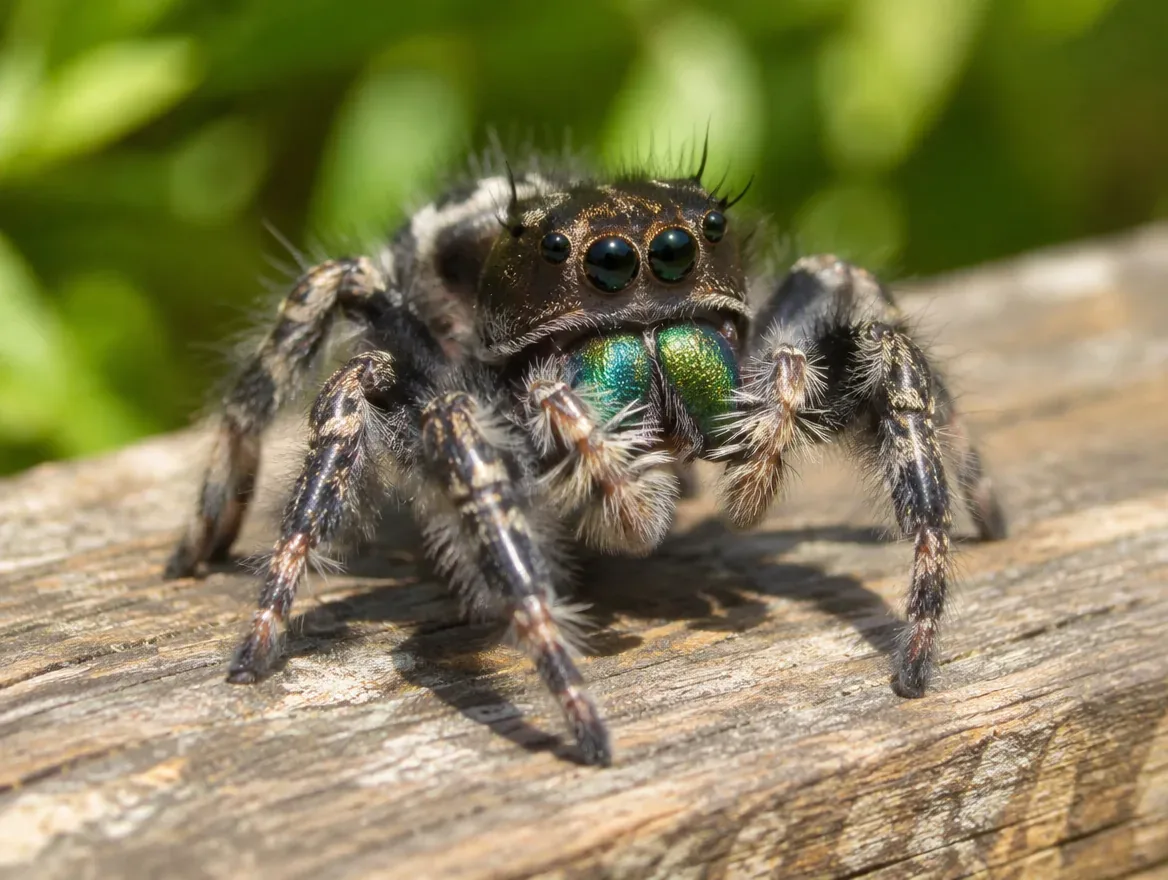
The giveaway is the face: two very large eyes point forward like headlights, with four smaller eyes on the face and one on each side of the head. Their eyesight is better than ours, and they often seem to watch you. A common Idaho species is the bold jumping spider, which is gray black with small white spots and shiny, iridescent jaws. Another is the flattened jumping spider, with black, gray and white stripes.

At a glance

Family
Salticidae (jumping spiders)
Common Idaho species
Bold jumping spider (Phidippus audax) and the flattened jumping spider (Platycryptus californicus)
Look
Compact, stout and hairy, with two large forward facing eyes
Web
None. They stalk and pounce
Active
During the day
Where seen
Windowsills, ceilings, walls and foundations
Bite
Rare. WSU compares it to a yellowjacket sting, less pronounced
Benefit
Important natural predators of pest insects
Look alikes

What else could it be?

Wolf spiders

Larger, with big eyes on the face but they run along the ground instead of hopping.

Crab spiders and running crab spiders

Flat bodied wanderers that walk sideways. They are also harmless.

Black widows

Shiny black with a red hourglass and a messy web, and found in dark corners. Jumping spiders are active in daylight and spin no web.

Where and when

Where do jumping spiders turn up around the Treasure Valley?

Jumping spiders live almost anywhere, indoors and out. At home you will see them on windowsills, ceilings and outside walls and foundations. They are active by day and stalk their prey, then pounce.

They are accidental invaders that get in through loose fitting windows and doors. University of Idaho Extension lists the bold jumping spider as perhaps the most common species Idahoans encounter.

Signs to look for

  • Small, hairy spiders hopping along windowsills and sunny walls
  • A spider that turns to look at you
  • No webs, because jumping spiders do not spin capture webs
  • Fewer flies and other small insects near the window
Health and safety

Are jumping spiders harmful?

University of Idaho Extension calls them absolutely harmless to humans. WSU notes that a bite, which is uncommon, is similar to a yellowjacket sting but less pronounced, and that larger species are the ones more likely to bite. Jumping spiders are valuable natural predators of insect pests.

How ProGuard handles it

How does ProGuard handle jumping spiders?

Most jumping spiders are welcome guests that keep insects down, and Extension advice is that they never need control action. If you simply do not want them inside, we seal and treat the outside of your home so fewer of them, and fewer of the insects they follow, get in.

Quarterly visits keep the protection up, and quarterly plan customers get a free return visit if covered pests come back between visits. There are no contracts. We work family and pet safe. Treated areas are safe for kids and pets once they’re dry, which is usually about 15 to 20 minutes.

Learn more on our our spider control service page, or request a free quote.
When to call a professional

  • You would like fewer spiders of every kind around the house
  • Spiders keep coming in through windows and doors
  • You want your home sealed and treated without a lot of fuss
  • You are not sure what you found
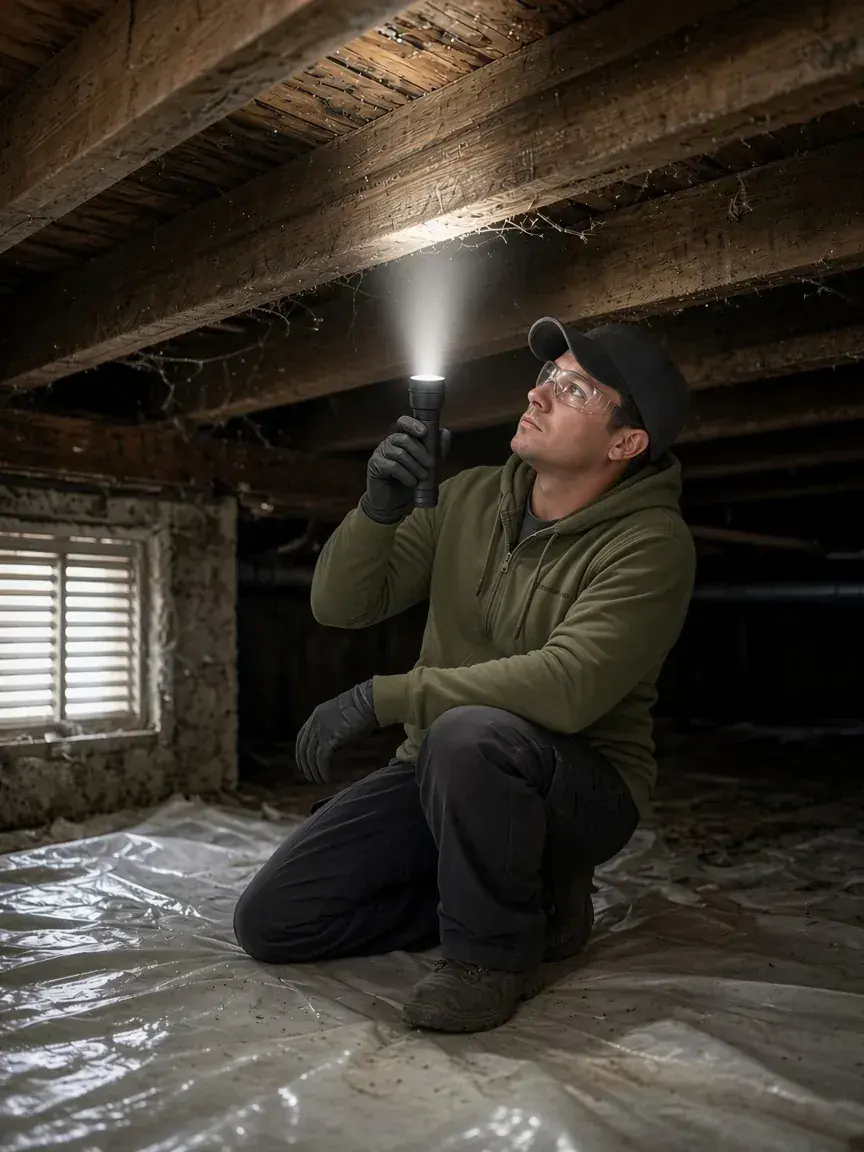
ProGuard technician checking crawlspace floor joists for signs of mice and spiders
Questions

What do people ask about jumping spider?

Are jumping spiders dangerous?
No. University of Idaho Extension calls them absolutely harmless to humans. A bite is uncommon, and WSU compares it to a yellowjacket sting but less pronounced.
Do jumping spiders bite?
Rarely. They are curious and may hop onto a hand, but bites are unusual and mild, and larger species are the ones more likely to bite.
How do I keep jumping spiders out of my house?
You can scoop any spider that does come in into a container and put it outside.
Does ProGuard treat for jumping spiders?
Yes, if you want them kept out. Spider service is part of our regular residential plans, and we give you a free quote first.
Keep reading

Related guides

Wolf spider

Big, hairy and harmless, and common in Idaho yards.

Wolf spider: signs and look alikes

Orb weaver

The big round webs under the eaves, and why they are harmless.

Read about the orb weaver

Yellow sac spider

Small, pale night hunters and the truth about their bite.

Yellow sac spider guide

Spider control

See what the service includes and how it works.

Spider control details

Also in this section: American house spider, Grass spider, False black widow. Local pages: Boise and Meridian.

Back to all identify your spiders.

Sources

  1. University of Idaho Extension: Idaho’s Arachnids Around the Home and Field (BUL 1094, 2025)
  2. WSU Pestsense: Jumping spiders
  3. UC Statewide IPM Program: Spiders

Written by the ProGuard team from the sources above. Last updated: November 17, 2026. This page is general information, not medical advice. If you are worried about a bite or your health, talk to a doctor.

Ready to keep pests out of your home?

Call, text or send a few details. We’ll give you a free quote before any work starts, and there are no contracts.